Eau de Parfum, Eau de Toilette, Cologne: What the Difference Really Is
What do Eau de Parfum, Eau de Toilette and Cologne actually mean? A clear guide to perfume concentrations, and why ours are blended at 25%.
Pick up almost any bottle of perfume and you’ll find a French phrase on the front: Eau de Parfum, Eau de Toilette, Eau de Cologne. Most people know one is “stronger” than the other, but few know what the words actually mean, or how much they really tell you.
Here is the short answer, and then the longer, more useful one.
The short answer
The name on the bottle describes the concentration: how much perfume oil is dissolved in the alcohol base. More oil generally means a richer, longer-lasting scent and a higher price.
What’s actually in a bottle of perfume
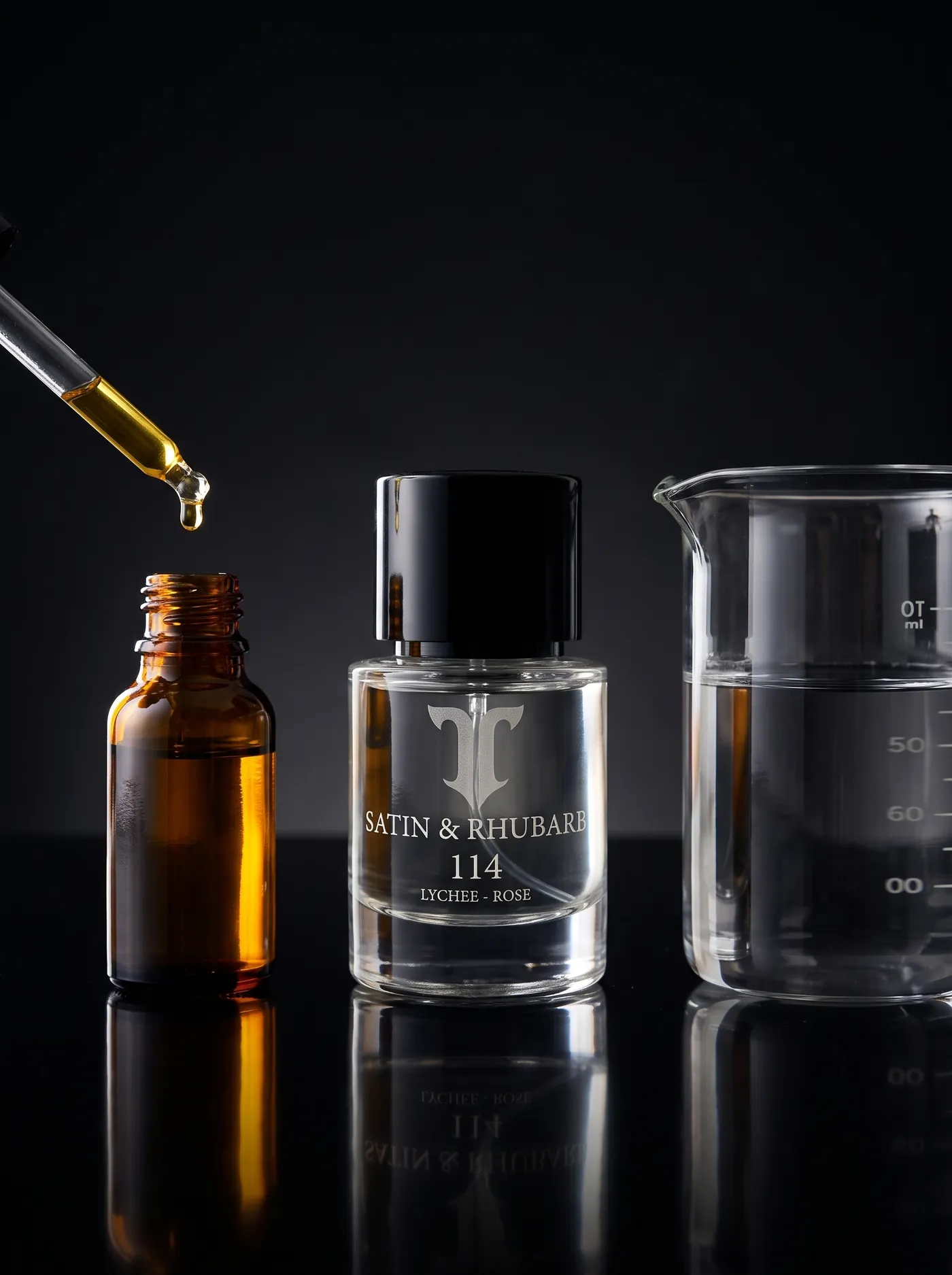
A typical alcohol-based perfume has three parts:
- Perfume concentrate (also called perfume oil or “juice”): the blend of aromatic materials that creates the scent. On an ingredient list this appears as Parfum (Fragrance).
- Alcohol: a specially denatured ethanol that carries the scent, helps it spread from the skin, and then evaporates.
- Sometimes a little water, mainly in lighter concentrations.
The concentration is simply the share of perfume concentrate in the finished product.
The concentration names, from lightest to richest
| Name | Typical concentration | What to expect |
|---|---|---|
| Eau Fraîche / body mist | about 1–3% | A soft, brief splash of scent |
| Eau de Cologne | about 2–5% | Light and refreshing, fades quickly |
| Eau de Toilette | about 5–15% | Brighter and lighter, made for everyday wear |
| Eau de Parfum | about 15–20% | Fuller, with more depth and staying power |
| Parfum / Extrait de Parfum | about 20–30% or more | The richest, most concentrated form |
One important caveat: these ranges are industry conventions, not legal definitions. There’s no international rule that says an Eau de Parfum must contain exactly a certain percentage. Each perfume house decides for itself, which is why you’ll find different figures in different guides, and why the ranges overlap.
A note on “cologne”: in many countries, especially in men’s fragrance marketing, “cologne” is used loosely to mean any men’s perfume, whatever its strength. In the traditional sense, Eau de Cologne is the lightest, citrus-led style.
Does a higher concentration always mean a better perfume?
Not necessarily. Concentration is one factor among several:
- The materials. Some ingredients, such as citrus oils, are naturally fleeting. Others, such as woods, resins, musks and ambers, linger for hours. A light, citrusy Eau de Parfum can fade sooner than a woody Eau de Toilette.
- The structure. Perfumes are built in layers of top, heart and base notes. A blend with a strong base will last longer on the skin. (We explain this in Top, Heart and Base Notes, Explained.)
- Your skin. Dry skin tends to hold scent for less time than moisturised skin.
- The climate. Heat makes perfume evaporate and project faster. In the UAE that matters a great deal. See How to Make Perfume Last Longer in UAE Heat.
So concentration tells you about the character of a perfume, intense or airy, as much as its longevity.
How the concentrations feel on the skin
- Eau de Cologne and Eau de Toilette tend to open brightly and feel airy. They suit hot afternoons, the office or the gym bag, and you may want to reapply during the day.
- Eau de Parfum sits closer to the heart and base of the composition. The scent feels rounder and develops more slowly over the day.
- Extrait de Parfum is dense and intimate. A little goes a long way, and it often wears closer to the skin than you might expect, because there’s less alcohol to lift it into the air.
Where Atelier T sits
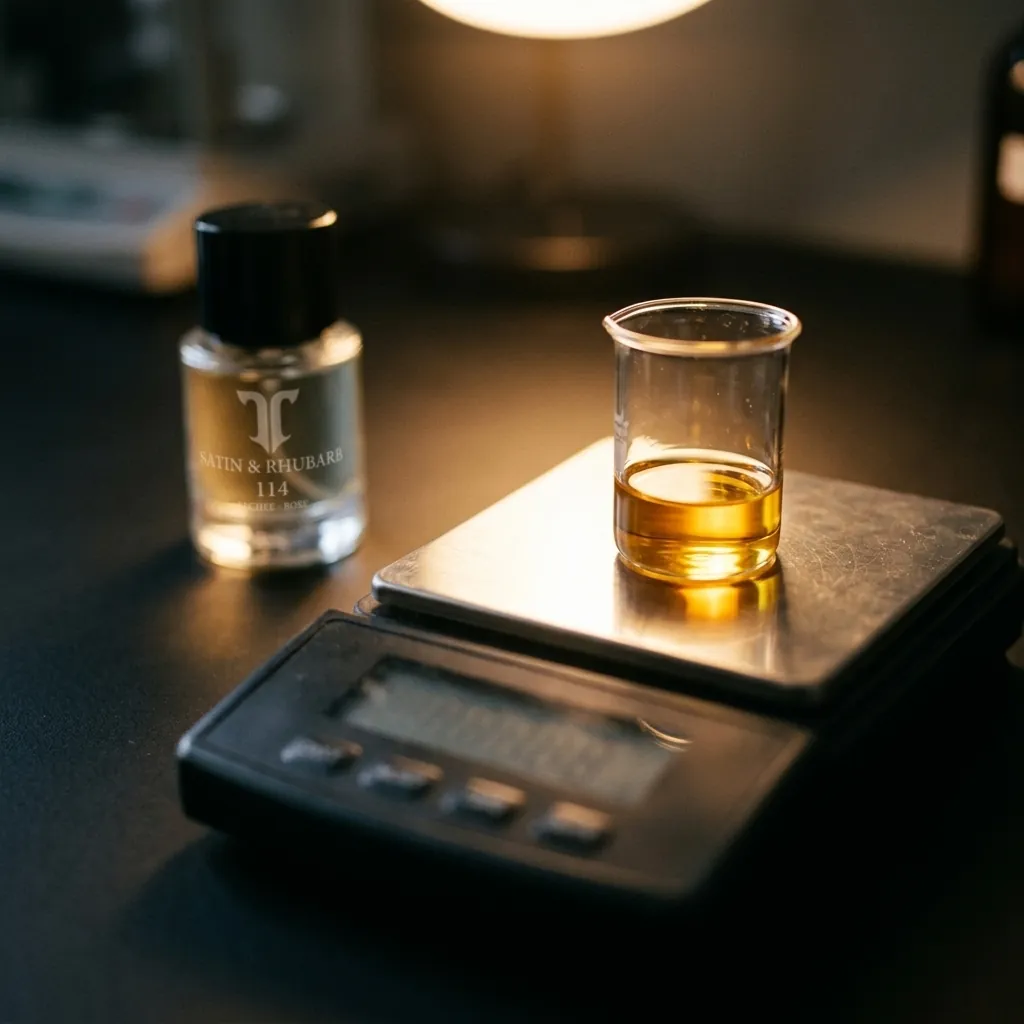
Every Atelier T perfume is blended at 25% perfume concentrate by weight.
That places our blends above the range usually quoted for Eau de Parfum, in territory where many houses would print “Extrait” on the bottle. We’ve chosen to keep the name Eau de Parfum for the whole range. We’d rather let the perfume speak on your skin than let the label do the talking.
Why tell you this? Because now that you know the names are conventions rather than rules, the percentage is the more honest number to look at. When comparing perfumes, it’s worth asking what the concentration actually is, not just what the bottle is called.
A few common questions
Is Eau de Parfum stronger than Eau de Toilette?
Generally yes: it contains more perfume concentrate. But because the ranges overlap and the materials differ, it’s a guideline rather than a guarantee.
Should I spray less of a more concentrated perfume?
Usually, yes. Start with two or three sprays on pulse points or clothing, and add more only if you need to.
Is “Parfum” on the ingredient list the same as Parfum on the front?
No. On the front of the bottle, Parfum is a concentration. On the ingredient list, Parfum (Fragrance) is the standard international name for the perfume blend itself, used whatever the concentration.
Why do Eau de Parfum and Eau de Toilette versions of the same perfume smell different?
Often they aren’t just stronger and weaker versions of one formula. Perfumers frequently adjust the composition for each concentration, so the Eau de Toilette may lean fresher and the Eau de Parfum warmer.
The takeaway
The words on the front of the bottle are a useful shorthand, but they aren’t a measurement. If you want to know how rich a perfume really is, look for the concentration. Then judge it the only way that counts: on your own skin, in your own climate, over a full day.
More from Atelier Notes
 Perfume BasicsHow to Make Perfume Last Longer in UAE HeatHeat and humidity make perfume fade fast. Practical tips for making your perfume last longer in the UAE, from where to spray to what to avoid.
 Perfume BasicsThe Fragrance Families: Finding Your Scent StyleFloral, amber, woody, fresh: a simple guide to the fragrance families, what each one smells like, and how to find the style that suits you.
 Perfume BasicsNatural vs Synthetic: What’s Really in Modern PerfumeAre synthetic perfume ingredients bad? Why almost every modern perfume blends natural and lab-made materials, and what each one brings to a scent.