Natural vs Synthetic: What’s Really in Modern Perfume
Are synthetic perfume ingredients bad? Why almost every modern perfume blends natural and lab-made materials, and what each one brings to a scent.
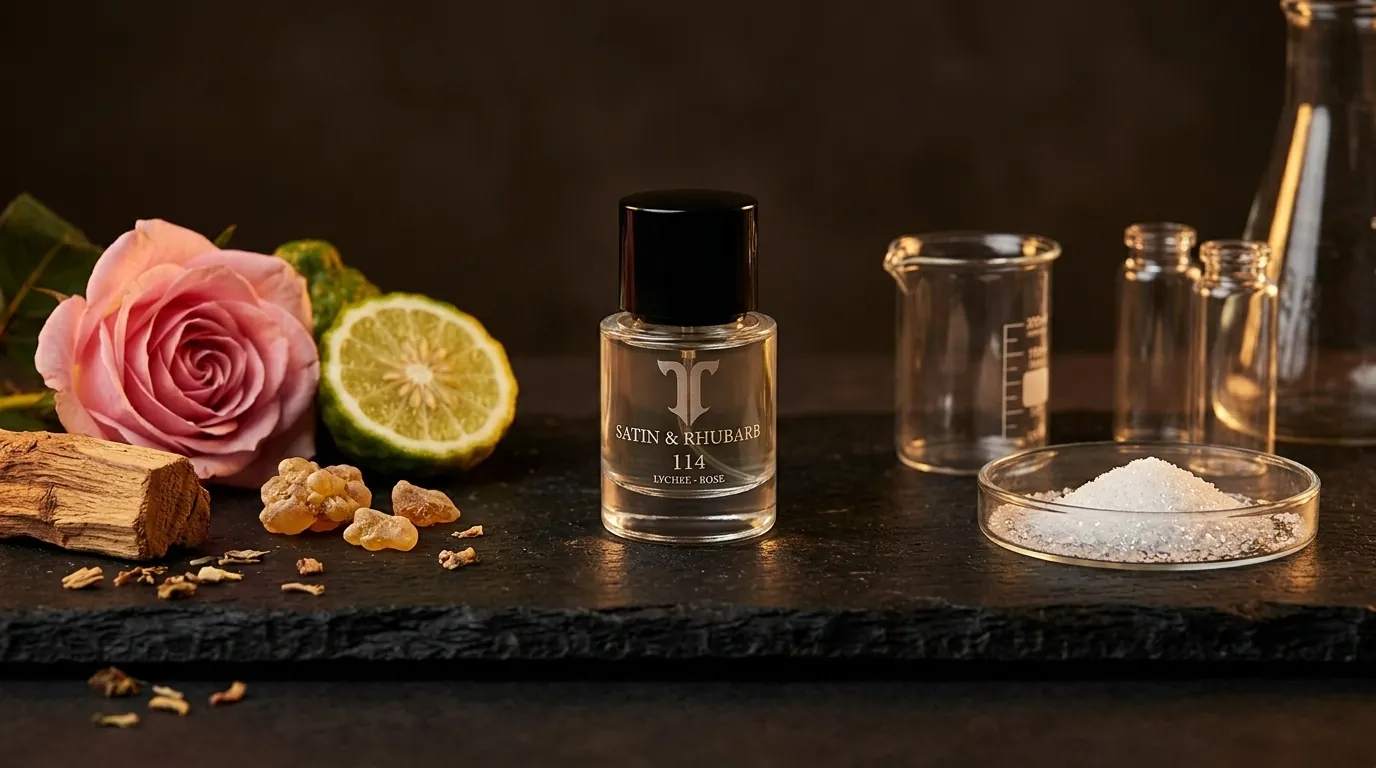
“Natural” sounds better, doesn’t it? On a perfume, it suggests gardens, flowers and purity, while “synthetic” sounds like a factory. The reality is more interesting, and almost every perfume you’ve ever loved has been a blend of both.
What “natural” means in perfumery
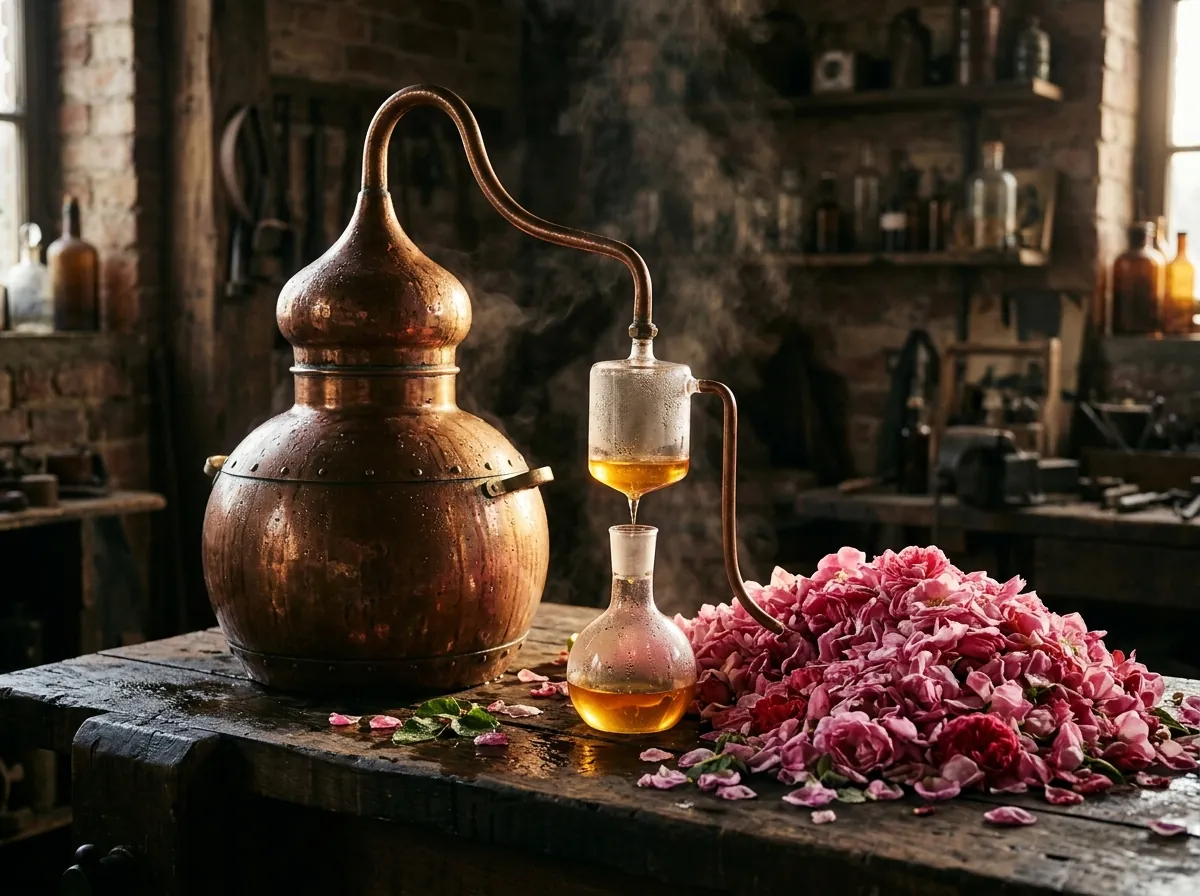
Natural materials come directly from plants, and historically from a few animals. They’re extracted in different ways:
- Pressing: citrus oils squeezed from the peel of bergamot, lemon or orange.
- Steam distillation: rose, lavender, sandalwood and many herbs.
- Solvent extraction: delicate flowers such as jasmine and tuberose, giving rich “absolutes”.
- Resins and gums: frankincense, myrrh, benzoin and labdanum, collected from trees and shrubs.
Naturals are complex. A single rose oil contains hundreds of different molecules, which gives it depth no single ingredient can match.
What “synthetic” means
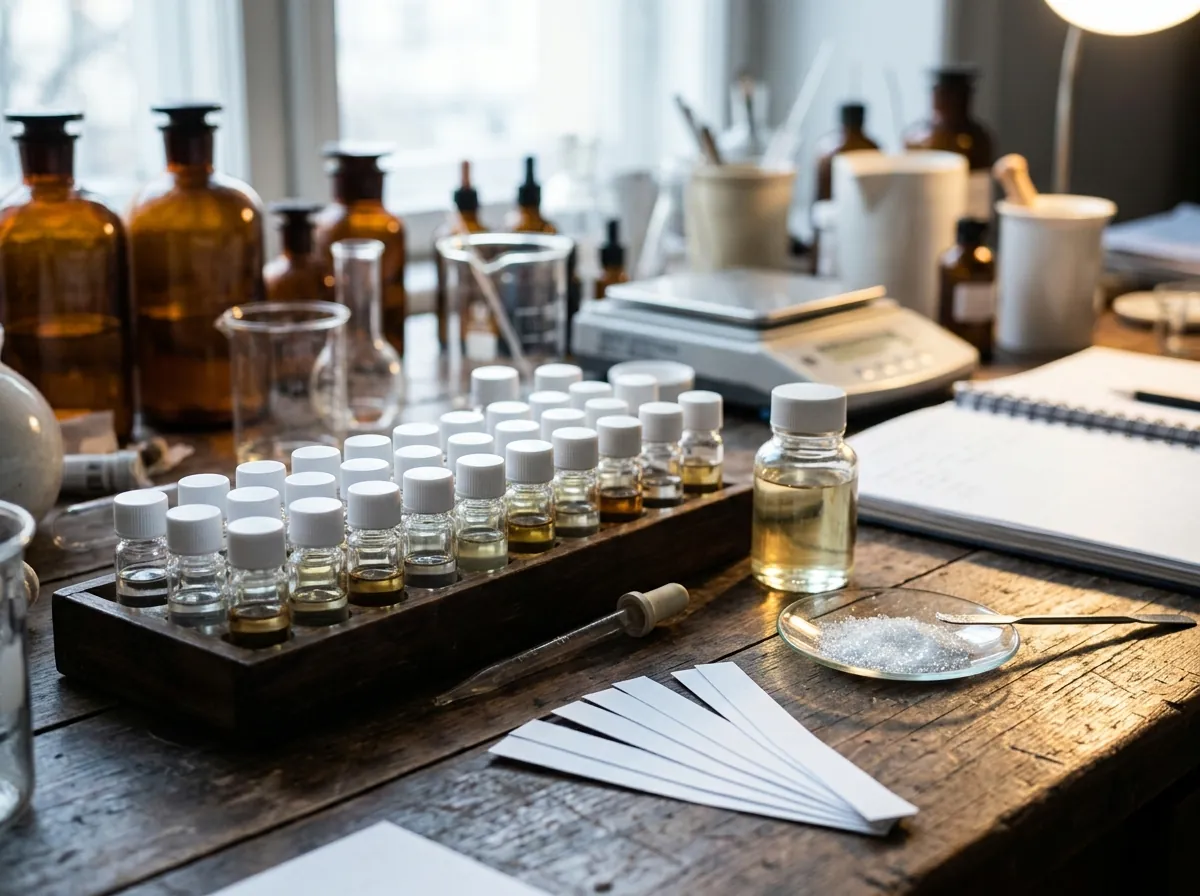
Synthetic materials (often called aroma chemicals) are made or refined in a laboratory. Some are exact copies of a molecule found in nature; others are new smells that don’t exist naturally at all.
They’ve been part of perfumery for well over a century. Coumarin, the warm, hay-like smell of tonka bean, was first made in a lab in the 1860s, and vanillin, the main smell of vanilla, in the 1870s. Soon after, perfumers were building entire perfumes around new synthetic materials. Modern perfumery, as we know it, was born from that combination.
Why perfumers use synthetics
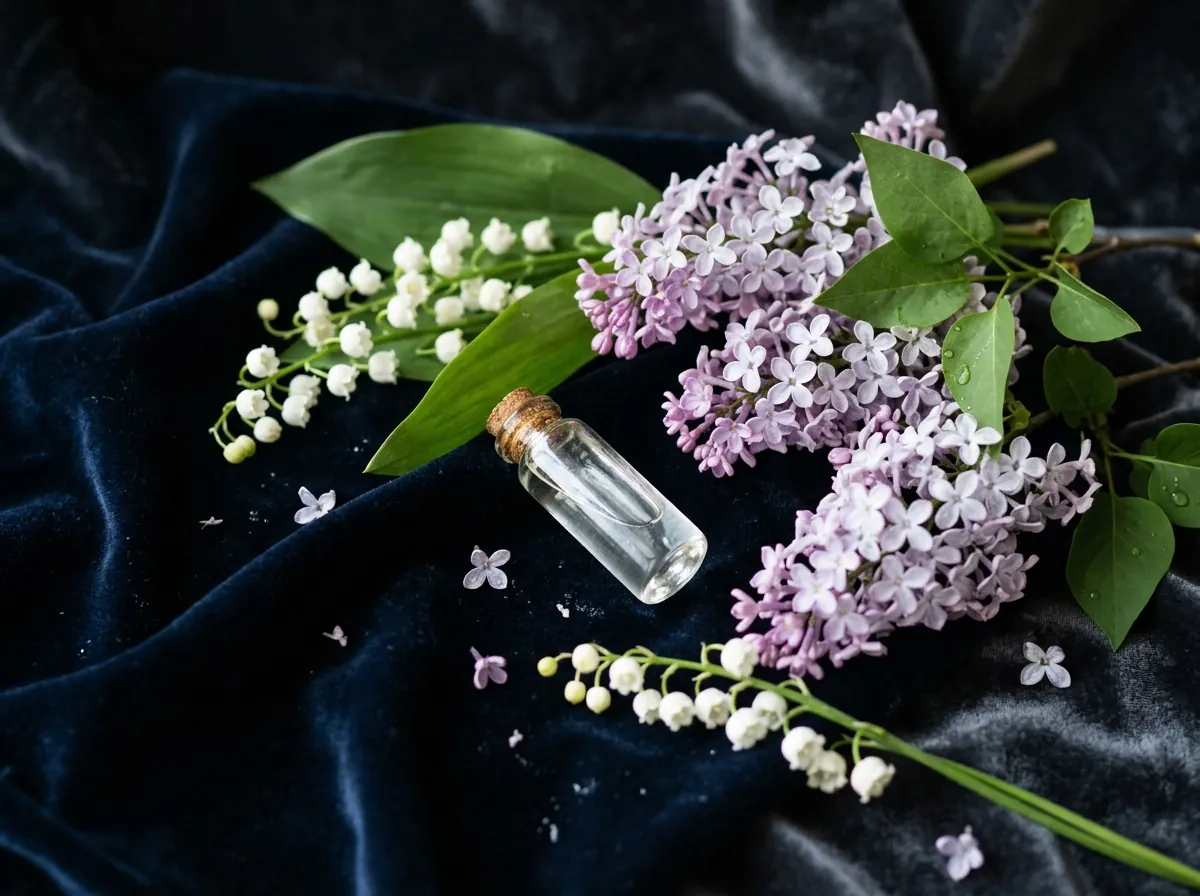
- To create smells nature can’t give us. Many flowers, like lily of the valley, lilac or freesia, produce little or no usable oil. Their scent in perfume is recreated.
- To protect animals. Musk once came from the musk deer and ambergris from whales. Today, perfumery relies on synthetic musks and ambergris-like materials instead.
- To protect plants. Some woods and resins have been over-harvested. Synthetic alternatives take pressure off endangered sources.
- For consistency. A natural harvest changes with every season and every field. Synthetics help a perfume smell the same from one bottle to the next.
- For lasting power and freshness. Some synthetic materials are far longer-lasting or brighter than their natural equivalents.
Why perfumers still love naturals
Naturals bring warmth, texture and a sense of life that’s hard to imitate. A good perfume often uses synthetics as the structure and naturals as the soul, each making the other better.
Is “natural” always safer?
Not necessarily. Natural materials can contain substances that irritate sensitive skin or react with sunlight; some citrus oils and oakmoss are examples. That’s why international safety standards, set by the International Fragrance Association (IFRA), apply to natural and synthetic materials alike, limiting how much of certain materials can be used. “Natural” and “synthetic” describe where an ingredient comes from, not whether it’s safe.
Is “synthetic” a sign of a cheaper perfume?
No. Some synthetic materials are inexpensive; others are among the most costly ingredients a perfumer uses. Some naturals, meanwhile, are cheap and plentiful. Quality comes from the choice of materials and the skill of the blend, not from a label.
How to read the label
On a perfume box you’ll usually see Parfum (Fragrance) in the ingredient list. That single name covers the whole perfume blend, natural and synthetic together. It’s the standard international way of listing it, and it doesn’t tell you the proportions. (See How to Read a Perfume Label.)
The takeaway
Natural and synthetic aren’t opposites; they’re partners. Nearly every perfume combines them, and the best ones use each for what it does best. Instead of asking whether a perfume is natural, ask whether you love how it smells, and how it makes you feel.
More from Atelier Notes
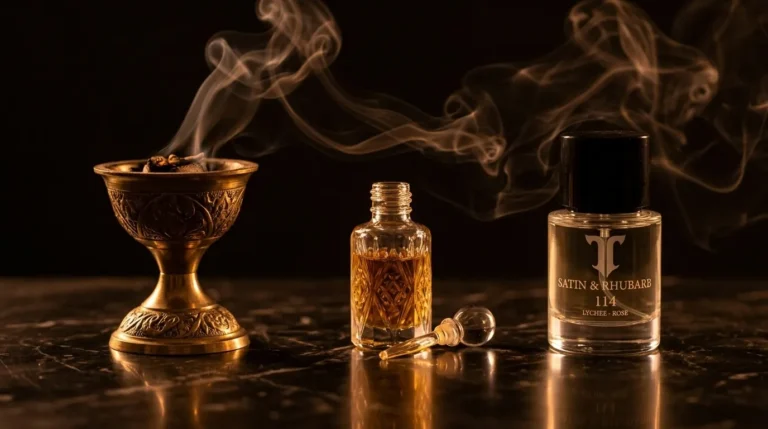 Perfume CultureBukhoor, Attar and Perfume: The Art of Layering Scent the Gulf WayIn the Gulf, scent is layered: bukhoor smoke, attar oil and perfume. What each one is, how to use bukhoor safely, and how to build your own scent ritual.
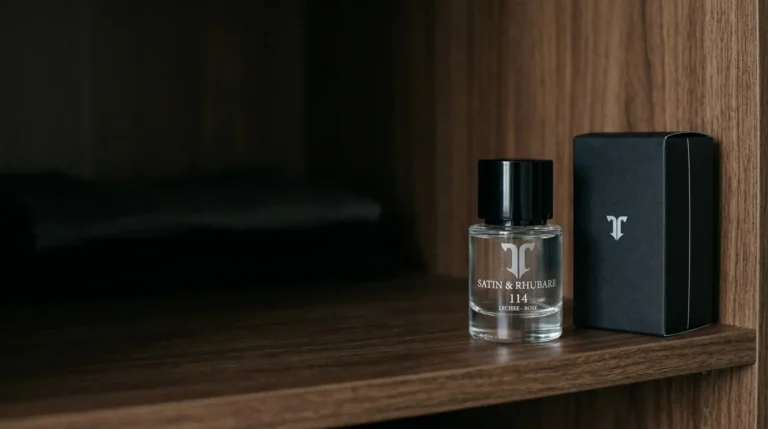 Perfume BasicsHow to Store Perfume in a Hot ClimateHeat, light and air are perfume's enemies. How to store perfume properly in the UAE climate, signs a perfume has turned, and the places to avoid.
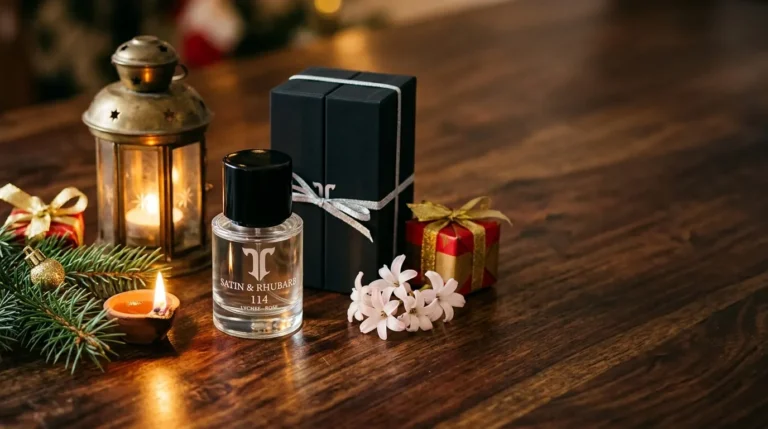 GuidesScent and Celebration: Perfume Gifts for Eid, Diwali, Christmas, Lunar New Year and NowruzPerfume is one of the most loved gifts across cultures. How to choose a perfume as a gift, plus thoughtful touches for Eid, Diwali, Christmas, Lunar New Year and Nowruz.