How to Find Your Signature Scent
A signature scent should feel like you. A simple, step-by-step way to find yours: what to notice, how to test, and how to know when you've found it.

Some people walk into a room and you know who it is before you see them. That’s a signature scent: a perfume worn so consistently, and so naturally, that it becomes part of who someone is.
Finding yours isn’t about chasing the most popular bottle or the most expensive one. It’s about noticing what you already love and testing patiently. Here’s a simple way to do it.
What a signature scent really is
A signature scent is less a rule than a habit. Some people wear one perfume for decades. Others keep a small “wardrobe” of two or three, one for daytime, one for evenings, one for the hottest months, all with a family resemblance. Both count. What matters is that the scent feels like you, not like a costume.
Step 1: Start with smells you already love
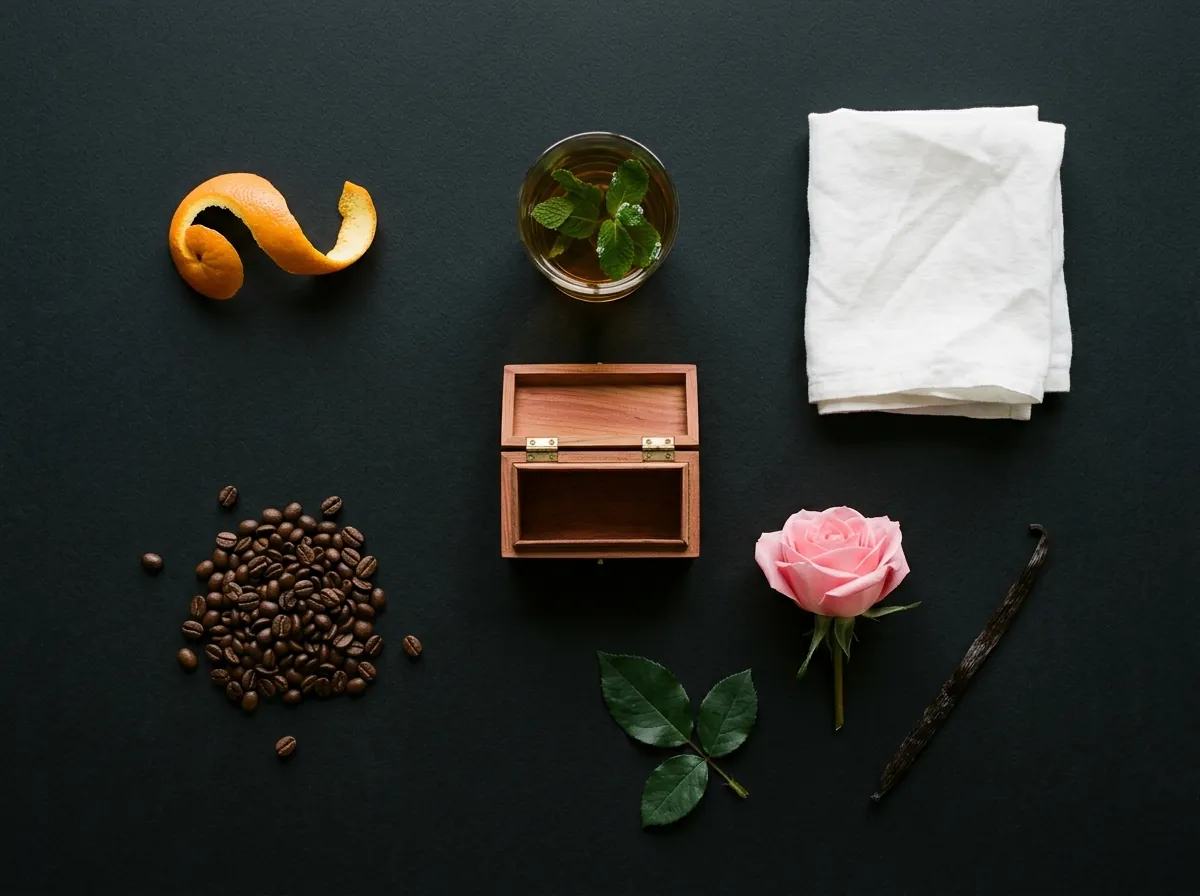
Before you smell a single perfume, make a short list of scents from everyday life that make you happy. For example:
- the peel of a fresh orange, or mint tea
- clean laundry or a warm bath
- roses, jasmine or orange blossom in bloom
- coffee, vanilla, warm bread
- a cedar or sandalwood box, a library, old books
- incense, smoke, a fire on a winter night
- the sea, rain on hot ground
Each of these points towards a fragrance family. Citrus and mint lead to Fresh; flowers to Floral; vanilla and spices to Amber; woods, smoke and leather to Woody. (Read The Fragrance Families to go deeper.)
Step 2: Look at the perfumes you’ve liked before
If a perfume has ever made you stop and ask “what is that?”, look up its notes. Do the same for any you’ve disliked. Patterns appear quickly: perhaps every scent you love has vetiver or musk in the base, or every one you’ve given away was very sweet. The base notes matter most, because they’re what you live with all day. (See Top, Heart and Base Notes, Explained.)
Step 3: Narrow it down to two or three directions
You don’t need to test fifty perfumes. Pick two or three families or note combinations that keep appearing, for example “fresh with woods” or “rose with amber”. Search within those.
Step 4: Test on skin, slowly
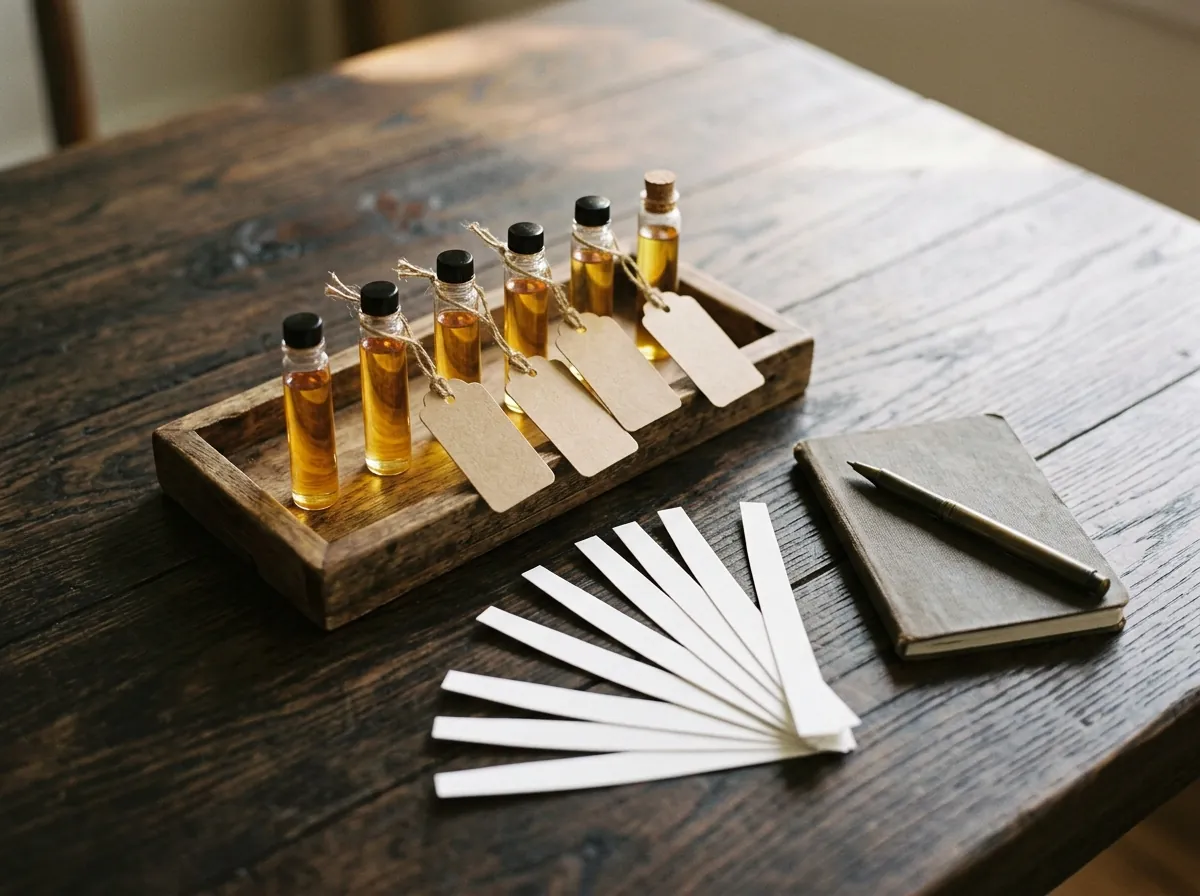
- Test no more than two or three at a time. After that, your nose gets tired and everything smells alike.
- Use your skin, not just paper. Paper shows you the notes; skin shows you the perfume.
- Wear it for a whole day. Notice how it opens, how it settles after an hour, and what’s left by the evening.
- Smell it in different places. A perfume can feel very different in an air-conditioned office and on a warm evening outside.
- Ask someone you trust. You stop noticing your own perfume after a while, but the people around you don’t.
Samples and small sizes are ideal for this stage. Living with a perfume for a few days tells you far more than a minute in a shop.
Step 5: Notice how it makes you feel

The right perfume tends to disappear into you. You feel more like yourself wearing it, not less. A few good questions:
- Do I reach for it without thinking?
- Do I miss it when I’m not wearing it?
- Does it suit my everyday life, not only special occasions?
- Do people say “you smell nice” rather than “what are you wearing”?
The last one is a subtle but useful sign. A signature scent blends with the person instead of announcing itself.
Step 6: Think about your climate and your days
Dubai life swings between heat outside and cool air indoors, and between work, gym, dinners and weekends. A perfume with a solid base of woods, musks or amber will keep you company longer in the heat; a very light citrus may vanish by midday. If you want one perfume for everything, choose something versatile: not too sweet, not too heavy, comfortable in a meeting room. If you prefer a wardrobe, let your evening scent be the bolder one. (See How to Make Perfume Last Longer in UAE Heat.)
Step 7: Commit, but stay curious
When you find it, wear it consistently for a while. That’s how a perfume becomes a signature: through repetition, in the memory of the people around you. You can always add to your wardrobe later, and tastes do change over the years. A signature scent is a long relationship, not a life sentence.
A quick checklist
- List five smells you love in everyday life.
- Find the fragrance families they belong to.
- Look up the notes of perfumes you’ve loved and disliked.
- Choose two or three directions.
- Test on skin, two or three at a time, over a full day.
- Pick the one you keep reaching for.
The takeaway
Your signature scent is already hinted at in the smells you love. Testing patiently, on your own skin and in your own days, is how you find the perfume that says it for you.
More from Atelier Notes
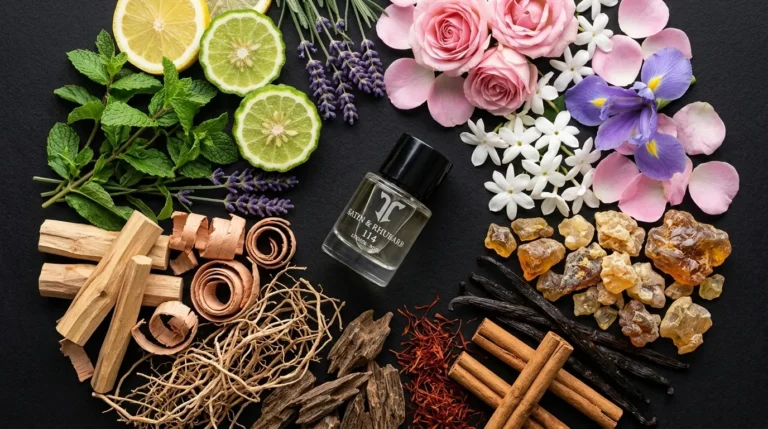 Perfume BasicsThe Fragrance Families: Finding Your Scent StyleFloral, amber, woody, fresh: a simple guide to the fragrance families, what each one smells like, and how to find the style that suits you.
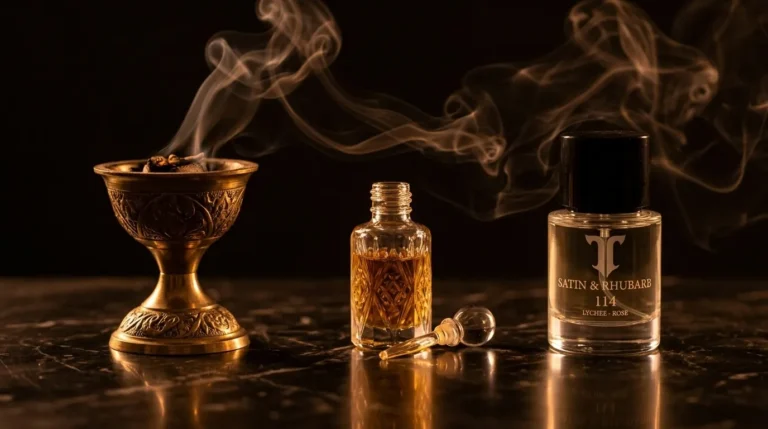 Perfume CultureBukhoor, Attar and Perfume: The Art of Layering Scent the Gulf WayIn the Gulf, scent is layered: bukhoor smoke, attar oil and perfume. What each one is, how to use bukhoor safely, and how to build your own scent ritual.
 Perfume CultureKannauj, India’s Perfume City, and the Art of AttarIn Kannauj, on the banks of the Ganges, perfumers still distil attars in copper pots, including one that smells of the first rain. The story of India's perfume city.