Kannauj, India’s Perfume City, and the Art of Attar
In Kannauj, on the banks of the Ganges, perfumers still distil attars in copper pots, including one that smells of the first rain. The story of India's perfume city.
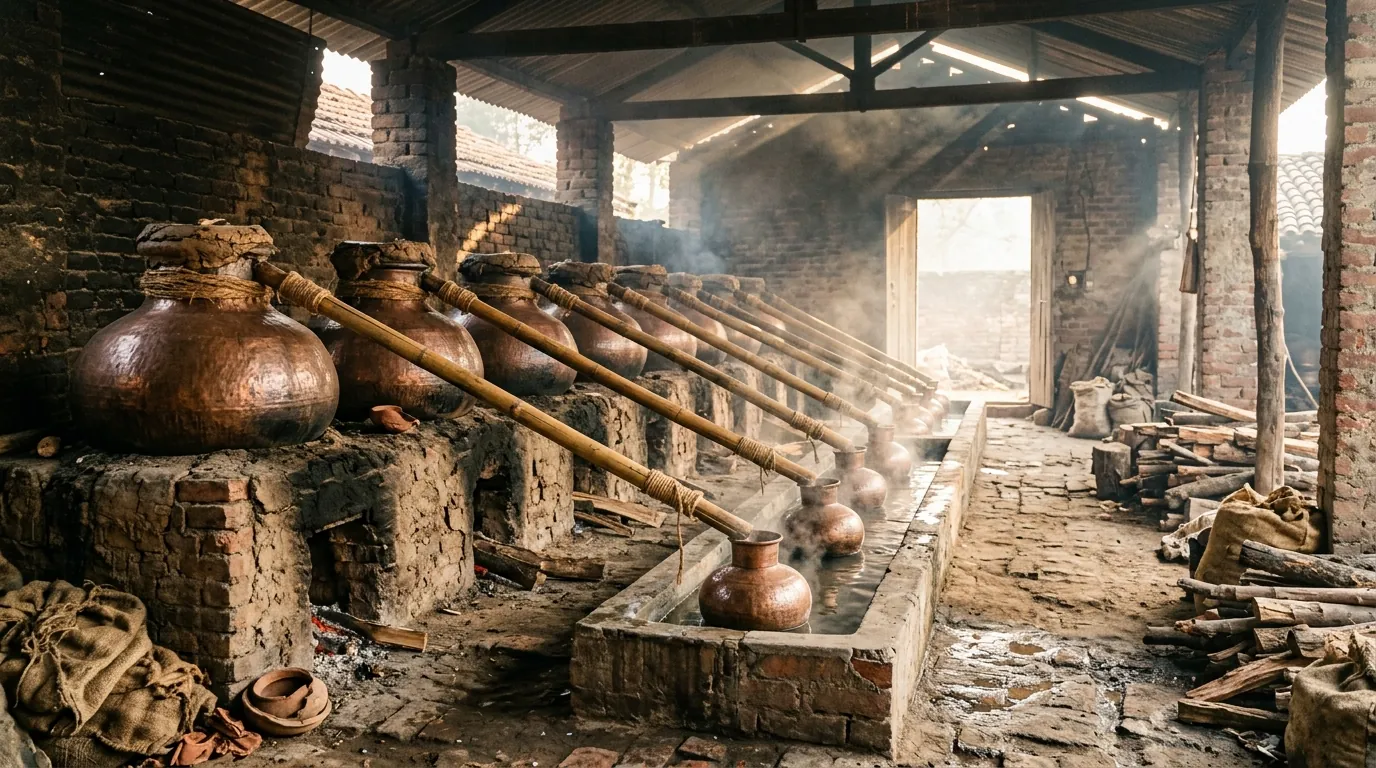
On the banks of the Ganges in Uttar Pradesh, northern India, lies a town whose air smells of roses, vetiver and rain. Kannauj has been making perfume for centuries, and it is still often called India’s perfume capital. Here, attars are distilled much as they were hundreds of years ago: slowly, over wood fires, in copper pots.
For the many South Asian families who call the UAE home, attar is a familiar scent of weddings, festivals and grandparents’ cupboards. For everyone else, it’s one of the world’s great perfume traditions.
What is an attar?
An attar (or ittar) is a perfume oil with no alcohol. Traditionally, the fragrance of flowers, herbs, woods or spices is distilled directly into a base oil, classically sandalwood oil, which absorbs and holds the scent. The result is rich and concentrated, and is applied in tiny amounts directly to the skin.
The deg and bhapka
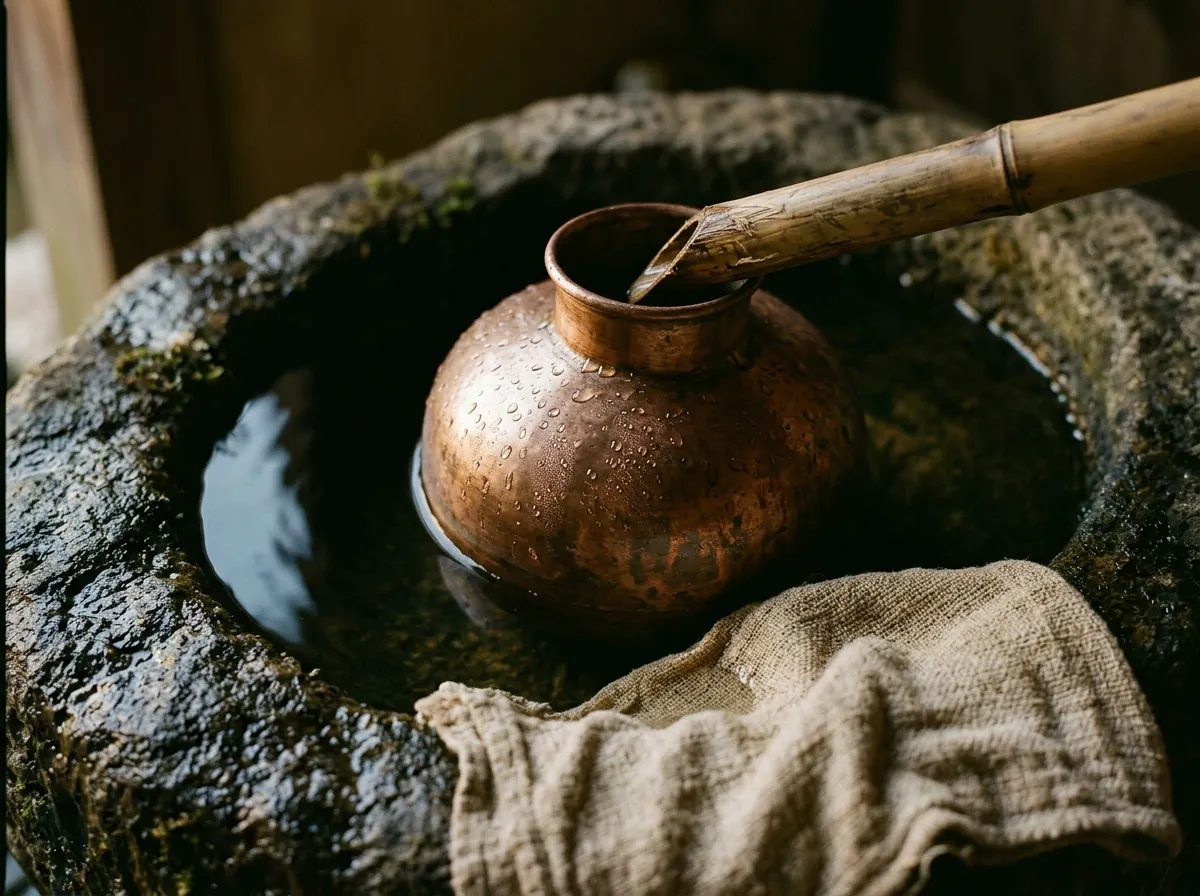
Kannauj’s perfumers use a method called deg-bhapka:
- Fresh flowers or other materials are placed with water in a large copper still, the deg, and the lid is sealed with clay.
- The deg is heated gently over a fire.
- The fragrant steam travels through a bamboo pipe into a copper receiver, the bhapka, which holds the base oil and sits in a trough of cool water.
- The steam condenses and the fragrance is captured in the oil.
- The process is repeated with fresh batches of flowers, sometimes many times over, until the oil is saturated with scent.
The work depends on skill and judgement: how hot the fire is, when to change the water, when to stop. Much of the knowledge has passed from one generation to the next.
The scent of the first rain
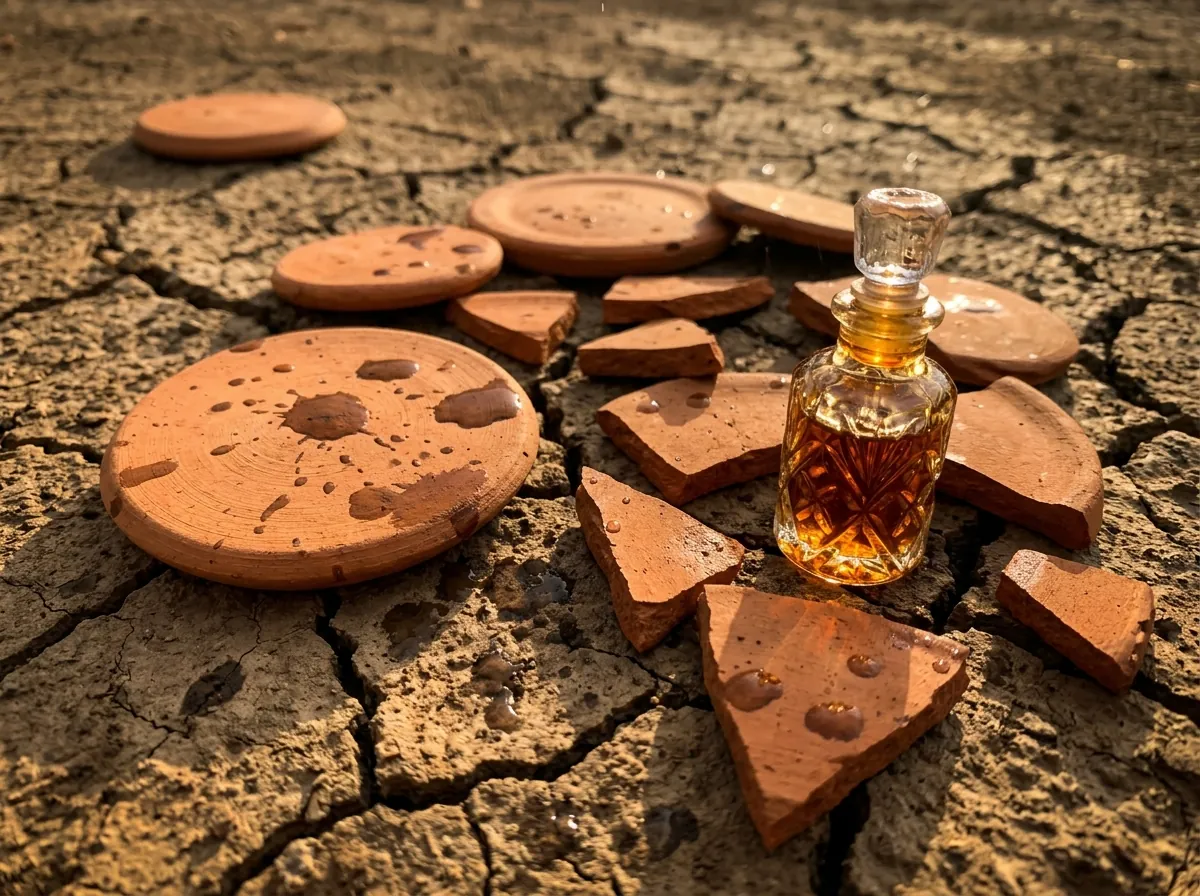
Kannauj’s most poetic creation is mitti attar, meaning “earth attar”. Perfumers bake discs of local clay and then distil them, capturing the smell of dry earth touched by the first monsoon rain. That smell has a name in English too: petrichor. Mitti attar is one of the very few perfumes in the world that tries to bottle a moment of weather.
Other classic attars
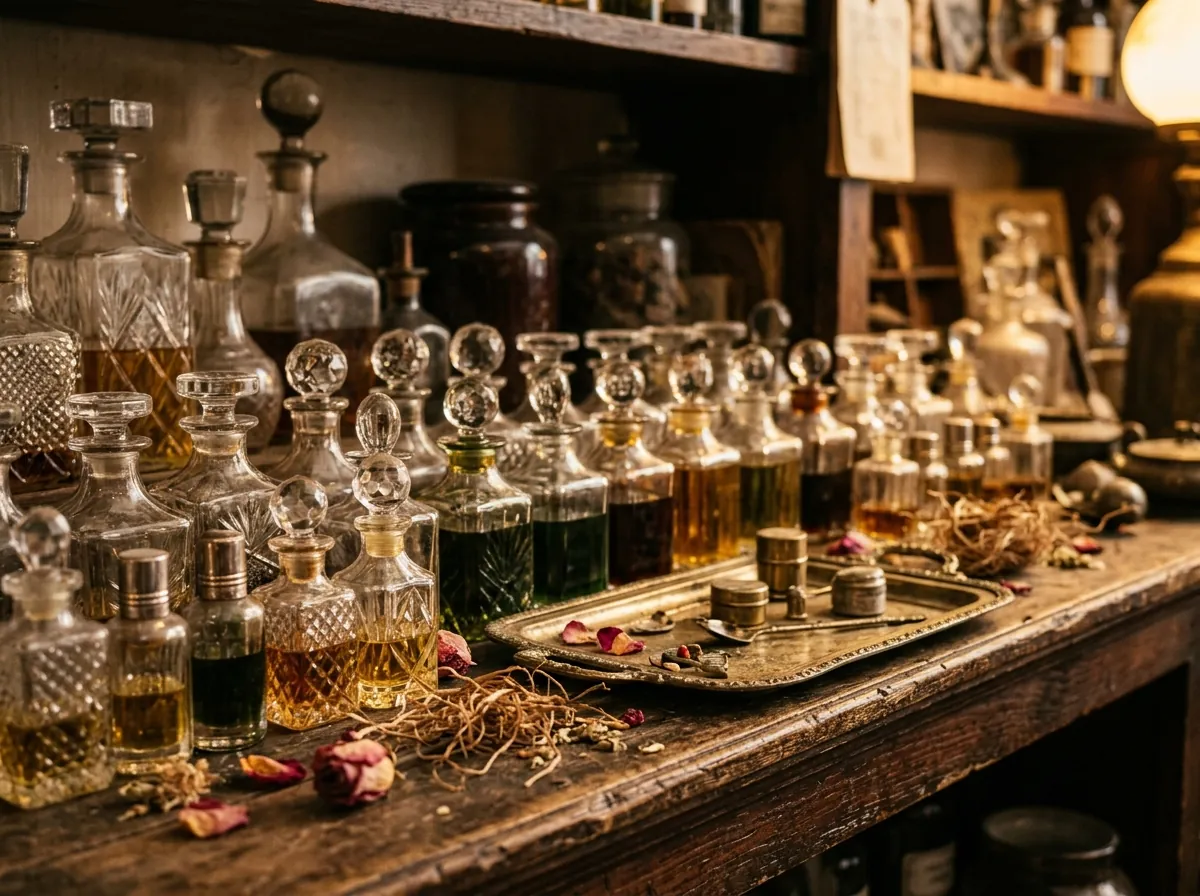
- Gulab (rose). Made from rose petals, often from fields near Kannauj; the pure rose oil is known as ruh gulab.
- Motia (jasmine). Rich, heady and summery.
- Kewda. From the fragrant pandanus flower, sweet and green.
- Khus (vetiver). Cooling, earthy and smoky, from vetiver roots; traditionally loved in the heat of summer.
- Shamama. A complex blend of many herbs, spices and resins, aged for depth; a winter favourite.
- Hina. A warm, spiced blend, also associated with the cooler months.
Attars are traditionally matched to the season: cooling scents like khus and gulab for summer, warm ones like shamama and hina for winter.
A meeting point of traditions
Kannauj sat on old trade routes linking India with Persia and Arabia, and its craft grew through those exchanges. One legend, recorded in the Mughal era, tells of rose oil being noticed floating on the surface of a palace bath, inspiring new ways of capturing rose scent. Whether or not the story is exact, it shows how deeply perfume was woven into court life.
Today, Kannauj’s attars travel far beyond India, including to the Gulf, where oil perfumes have their own long tradition. It’s another example of how scent cultures meet in a city like Dubai. (Read Bukhoor, Attar and Perfume.)
How to wear attar
- Use very little. One small dab on the wrist, behind the ears or on the inner elbow is enough.
- Let it warm. Attars open slowly on the skin and stay close to it.
- Mind your fabrics. Oils can mark light or delicate fabrics; apply to skin and let it settle before dressing.
- Layer if you like. An attar under a spray perfume can add depth and longevity.
The takeaway
Kannauj reminds us that perfume can be patient work: fire, copper, flowers and time. Whether you grew up with attar or are discovering it now, it’s a beautiful way to wear scent, close to the skin and full of history.
More from Atelier Notes
 Perfume BasicsHow to Find Your Signature ScentA signature scent should feel like you. A simple, step-by-step way to find yours: what to notice, how to test, and how to know when you've found it.
 Perfume BasicsThe Fragrance Families: Finding Your Scent StyleFloral, amber, woody, fresh: a simple guide to the fragrance families, what each one smells like, and how to find the style that suits you.
 Perfume CultureKolonya: Turkey’s Lemon Cologne of HospitalityIn Turkish homes, guests are welcomed with a splash of lemon kolonya. The story of this refreshing cologne, from its 19th-century roots to its place in hospitality today.