How to Read a Perfume Label: Ingredients, Allergens, Batch and Expiry
What do Alcohol Denat., Parfum (Fragrance), batch numbers and expiry symbols on a perfume box mean? A simple guide to reading a perfume label.
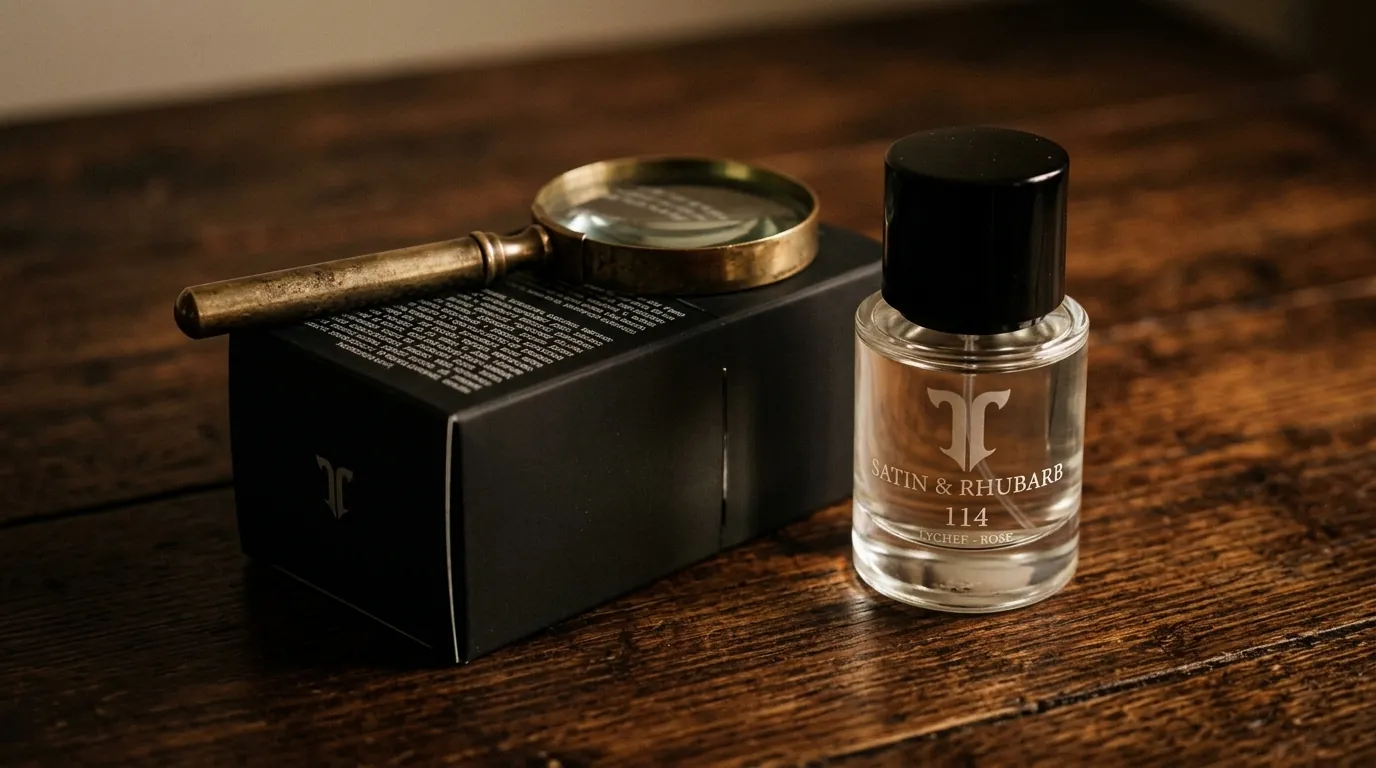
A perfume box carries a surprising amount of information, much of it in small print and some of it in Latin-looking words. Once you know what to look for, the label tells you what’s inside, when it was made, and how to look after it.
The name and the concentration
The front of the box usually shows the perfume’s name and its concentration, such as Eau de Parfum or Eau de Toilette. The concentration describes how rich the blend is. (See Eau de Parfum, Eau de Toilette, Cologne.)
The volume
Shown in millilitres (ml), sometimes with fluid ounces (fl oz) as well. Common sizes are 30, 50 and 100 ml.
The ingredient list
Cosmetic ingredients are listed using a standard international naming system called INCI. Ingredients usually appear in descending order of quantity. On a typical alcohol-based perfume you’ll see:
- Alcohol Denat. Denatured alcohol, the base that carries the scent and then evaporates. “Denatured” means it has been made undrinkable.
- Parfum (Fragrance). The perfume blend itself. This one name covers all the aromatic materials, natural and synthetic, that create the scent. Perfume formulas are closely guarded, so they’re listed as one item.
- Aqua (Water). Present in some perfumes, especially lighter concentrations.
- Other ingredients. Some perfumes include UV filters to protect the colour, antioxidants, or colourants (listed as CI followed by a number).
Allergens
Some fragrance materials, such as limonene, linalool, citral, geraniol or coumarin, are known to cause reactions in a small number of people. In many markets, these must be named individually on the label when they’re present above certain levels. They often appear after Parfum (Fragrance) in the ingredient list.
Seeing them there doesn’t mean a perfume is unsafe. They’re common in both natural and synthetic materials (lavender and citrus oils naturally contain linalool and limonene, for example). The list is there so that people who know they’re sensitive to a specific material can avoid it.
If you have sensitive skin, test a perfume on a small area first, or apply it to clothing rather than skin.
The batch number
A short code, often printed or stamped on the box or bottle base. It identifies when and where that perfume was made. Batch numbers matter for quality control: if a manufacturer ever needs to trace a production run, this is how they do it.
Expiry date or “period after opening”
You’ll see one of two things:
- An expiry or “best before” date, showing until when the perfume is expected to stay at its best.
- A small open-jar symbol with a number and the letter M, such as 24M or 36M. This is the period after opening: the number of months the product is expected to stay at its best once opened.
Perfume doesn’t go bad like food, but it does change with age, heat and light. (See How to Store Perfume in a Hot Climate.)
Warnings
Most perfume labels include warnings such as:
- Flammable. Because of the alcohol. Keep away from flames, heat and direct sun.
- Avoid contact with eyes.
- Keep out of reach of children.
- For external use only.
In the UAE, you’ll typically find these in both Arabic and English.
Origin and maker
Labels usually state the country of origin (“Made in…”) and the company responsible for the product.
On an Atelier T box
Every Atelier T perfume shares one black box. On it you’ll find:
- Front: Eau de Parfum, hand blended, and the volume in ml.
- Back: the ingredients (Alcohol Denat., Parfum (Fragrance)), warnings in English and Arabic, and Made in the UAE.
- Side sticker: the fragrance name and notes, the batch number and the expiry date.
The takeaway
The label is your perfume’s passport. In a few seconds it tells you what the perfume is, what’s in it, when it was made and how long it will stay at its best. It’s worth a closer look before you buy.
More from Atelier Notes
 Perfume BasicsWhy the Same Perfume Smells Different on Different PeopleThe same perfume can smell different on you and your friend. What really changes a scent on the skin, from skin type to heat, and what you can do about it.
 Perfume BasicsEau de Parfum, Eau de Toilette, Cologne: What the Difference Really IsWhat do Eau de Parfum, Eau de Toilette and Cologne actually mean? A clear guide to perfume concentrations, and why ours are blended at 25%.
 GuidesScent and Celebration: Perfume Gifts for Eid, Diwali, Christmas, Lunar New Year and NowruzPerfume is one of the most loved gifts across cultures. How to choose a perfume as a gift, plus thoughtful touches for Eid, Diwali, Christmas, Lunar New Year and Nowruz.