What Is Oud? The Story of the Gulf’s Most Precious Scent
Oud, or agarwood, is one of the world's rarest perfume materials. Where it comes from, why it's so valuable, and how it's used in the Gulf today.
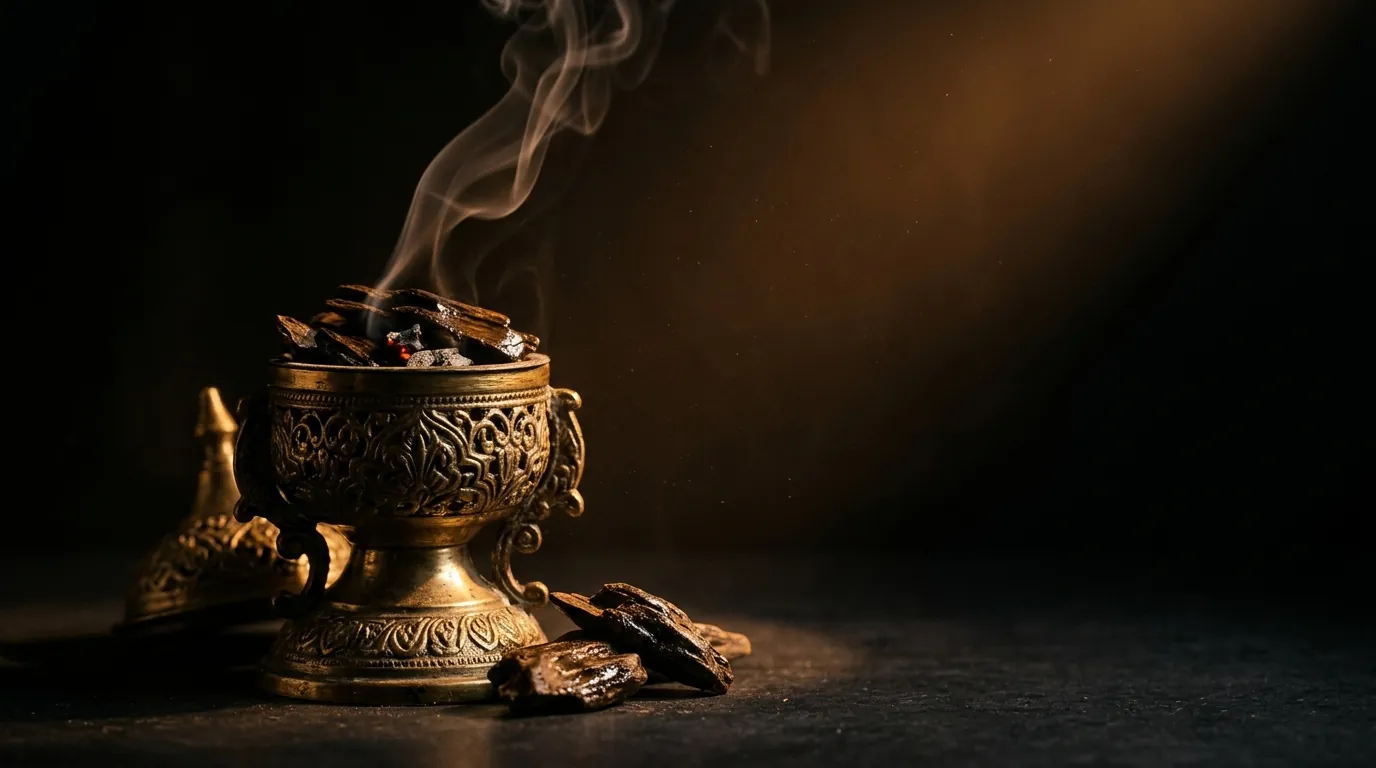
In the Gulf, oud is more than a perfume note. It’s the scent of welcome, of weddings and Eid mornings, of a majlis after guests have gone. Its smoke drifts from a mabkhara at the door; its oil is dabbed behind the ears before prayer. Few materials carry so much meaning.
Yet oud begins as something unexpected: a tree’s response to an injury.
Where oud comes from

Oud, also known as agarwood, comes from trees of the Aquilaria genus (and the related Gyrinops), native to South and Southeast Asia: India, Bangladesh, Myanmar, Thailand, Cambodia, Laos, Vietnam, Malaysia, Indonesia and beyond.
A healthy Aquilaria tree has pale, light wood with almost no scent. But when the tree is wounded and infected by a particular mould or fungus, it defends itself by producing a dark, fragrant resin. Over many years, the resin saturates the wood, turning it dense, dark and deeply aromatic.
This resin-rich heartwood is oud.
Why oud is so precious
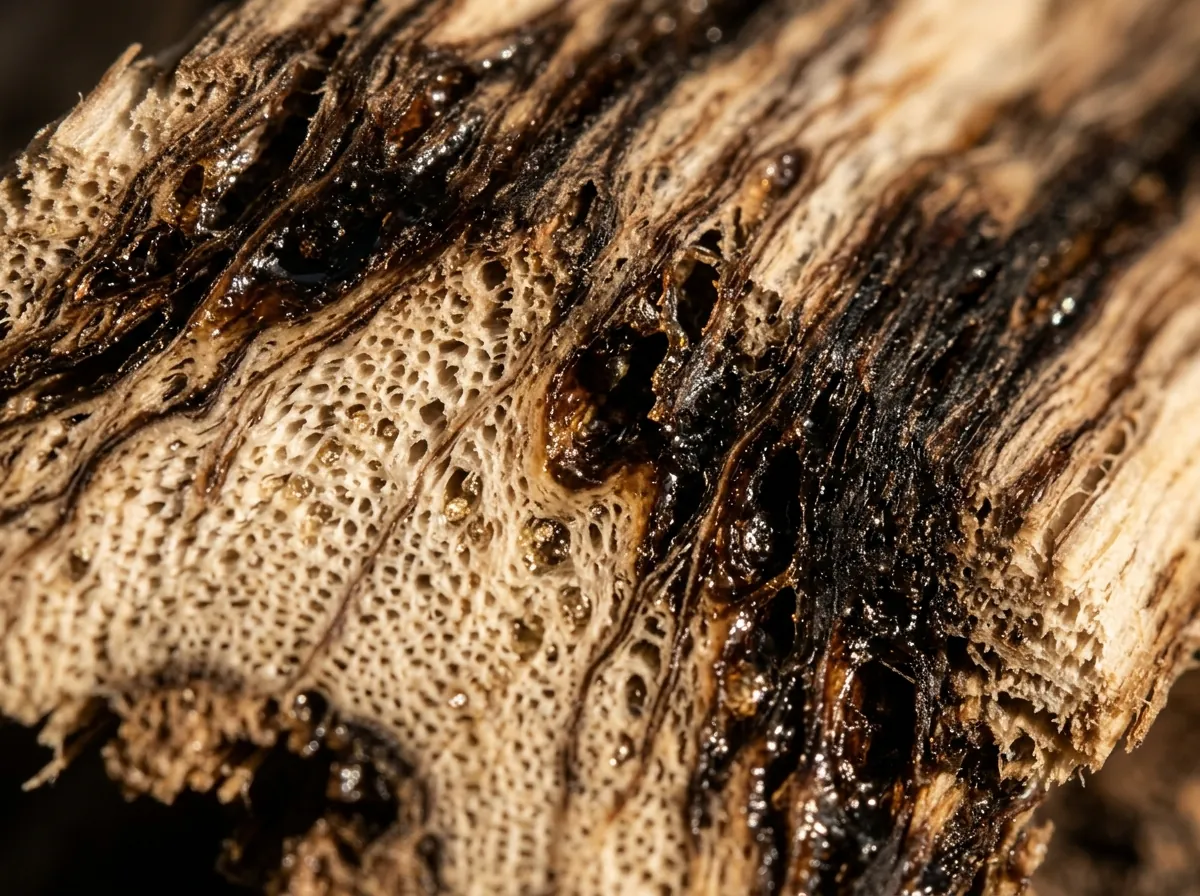
- Only a small share of trees produce it. In the wild, many Aquilaria trees never develop the resin at all.
- It takes time. High-quality oud can take decades to form naturally.
- Wild trees are protected. Over-harvesting made wild agarwood so scarce that Aquilaria species are now listed under CITES, the international agreement that controls trade in endangered species. Trade is permitted but regulated.
- The yield is tiny. A large quantity of wood produces only a small amount of oil.
Today, much of the world’s oud comes from cultivated plantations, where trees are deliberately inoculated to start resin formation. Plantation oud has made oud more available and more sustainable, though connoisseurs still prize old, wild-harvested material above all.
The finest oud oils are among the most expensive materials in perfumery, often compared with gold by weight.
The forms of oud
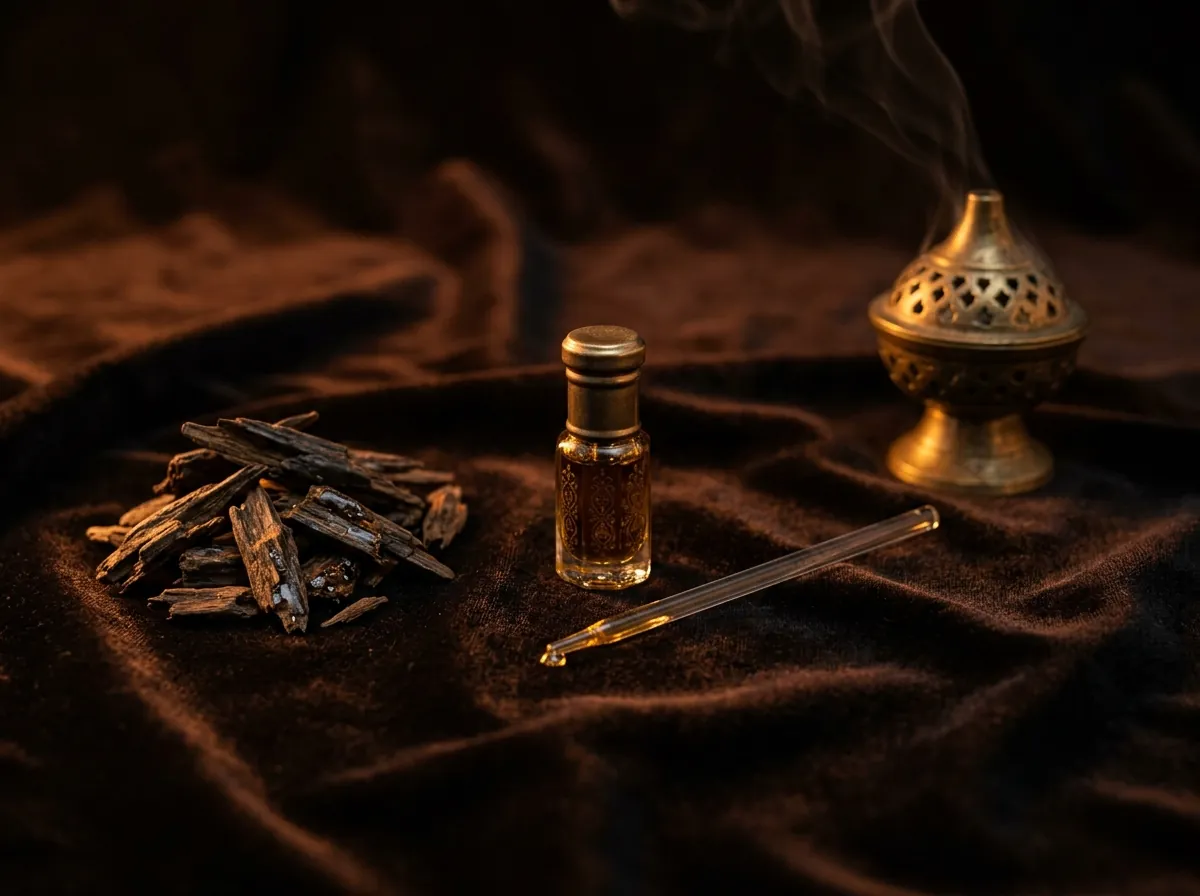
Oud wood (chips)
Pieces of resinous wood, graded by density, colour and scent. They’re burned slowly on charcoal or an electric burner in a mabkhara, releasing fragrant smoke used to scent homes, clothes and hair, and to honour guests.
Oud oil (dehn al oud)
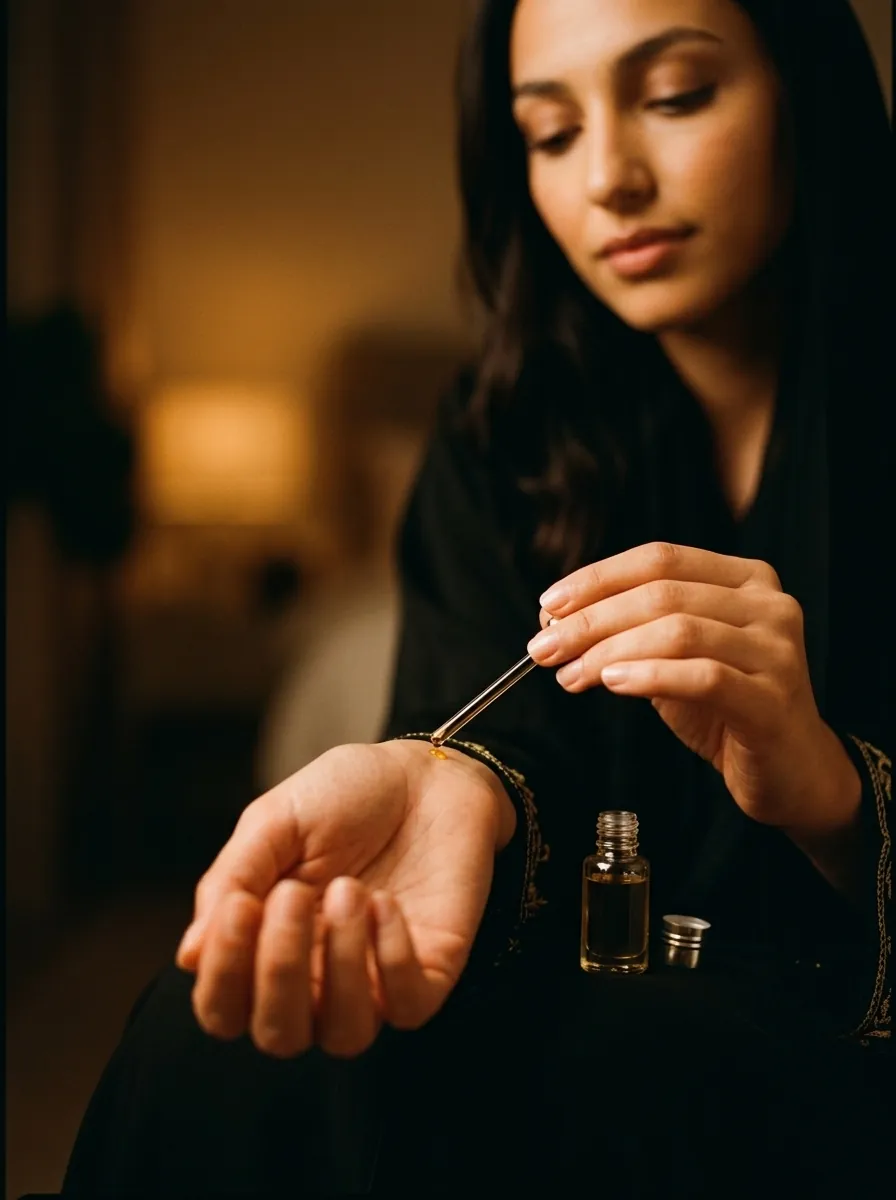
Oil distilled from agarwood, usually by soaking and then slowly distilling the wood. Pure oud oil is applied in tiny amounts directly to the skin, often from a small bottle with a glass applicator. Its scent can be smoky, woody, leathery, animalic, sweet or even fruity, varying greatly by origin, tree and distillation.
Oud in modern perfume
In Western-style alcohol-based perfumes, oud usually appears as a note within a wider composition, paired with rose, saffron, amber, vanilla or spices. This style became popular worldwide in the 2000s and 2010s, carrying the Gulf’s love of oud to perfume counters everywhere.
Natural and synthetic oud
Because natural oud oil is so rare and costly, and its trade is regulated, many perfumes use oud accords: blends of other natural and synthetic materials that recreate the character of oud. Some combine a small amount of natural oud with an accord.
Neither is simply “better”. A well-made accord can be consistent, wearable and beautifully balanced. Natural oud oil has a depth and variation that is unique to each batch. They’re different experiences, and both have a place.
What does oud smell like?
It’s famously hard to describe, and no two ouds smell the same. Common impressions include:
- Woody: deep, dry and dark
- Smoky: like incense or a fire’s embers
- Leathery and animalic: warm, almost skin-like
- Sweet and balsamic: honeyed and resinous
- Earthy or medicinal: especially in younger or stronger ouds
People new to oud sometimes find its first impression intense. Paired with rose, amber or vanilla, it becomes softer and easier to love, which is why those combinations are so classic.
Oud in Gulf tradition
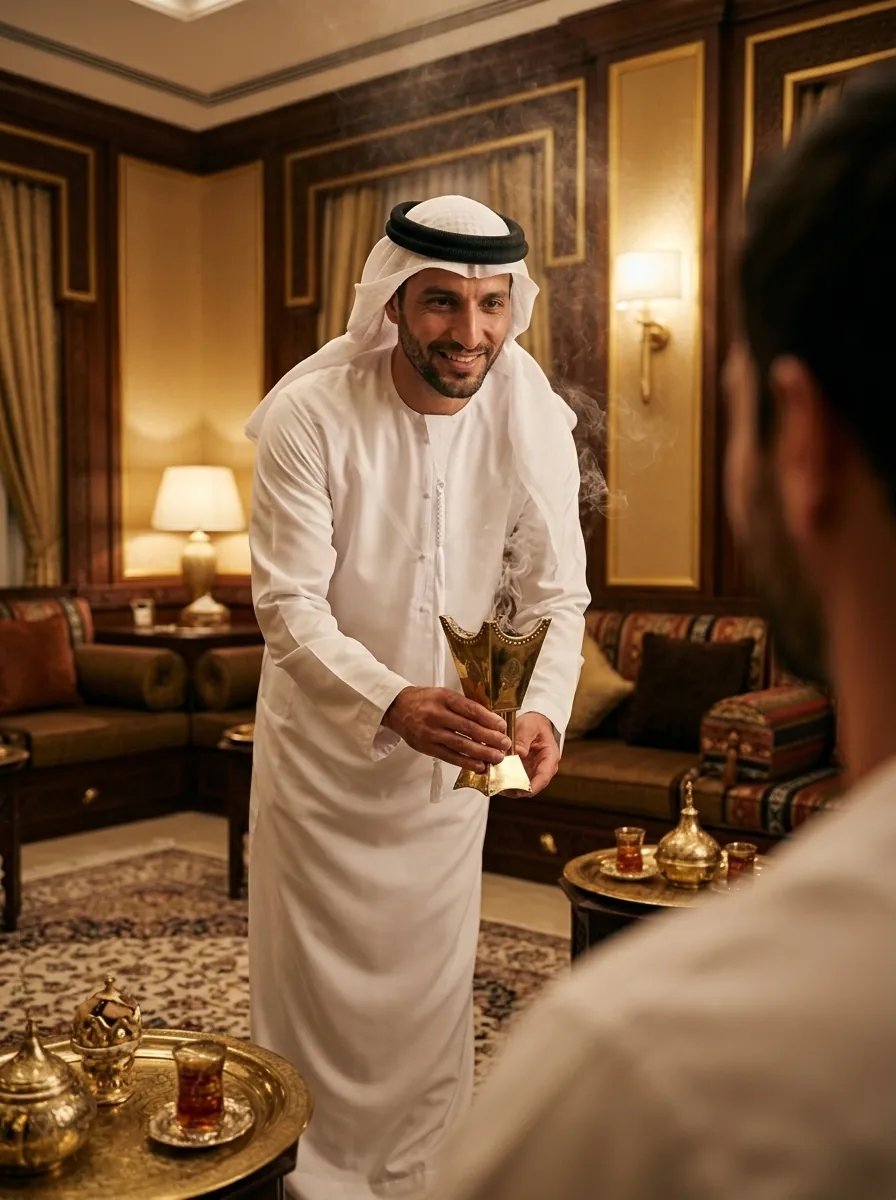
- Welcoming guests. Passing the mabkhara among guests, so each can scent their clothes and hair, is a gesture of hospitality, often at the end of a visit.
- Celebrations. Weddings, Eid and family gatherings are filled with oud smoke and oil.
- Personal ritual. Many people apply oud oil or burn oud before Friday prayers or important occasions.
- Gifting. Fine oud oil or wood is a gift of real respect.
Oud beyond the Gulf
Oud is treasured far beyond Arabia. In Assam, in north-east India, agarwood has been distilled for generations, and many of the world’s oud oils still come from India, Bangladesh and Southeast Asia. In Japan, agarwood (jinkō) is at the heart of kōdō, the “way of incense”, where guests “listen” to fragrant wood gently warmed over ash; the rarest grade is known as kyara. Chinese and Buddhist traditions have long burned agarwood in temples and during meditation.
In Dubai, all of these traditions meet. That’s why you’ll find oud in an Emirati majlis, an Indian attar shop and a Japanese incense box alike.
How to start with oud
- Try it in a blend first. A perfume where oud is softened by rose, amber or vanilla is a gentle introduction.
- Then try oud smoke. Light a small piece of oud wood in a mabkhara and let your clothes take in the scent.
- Then oil. A single small dab on the wrist lets you discover pure oud slowly.
- Give it time. Oud changes on the skin over hours. Judge it at the end of the day, not the first minute.
The takeaway
Oud is rare, slow and unpredictable, which is exactly why it’s treasured. Whether you meet it as smoke, oil or a note in a perfume, you’re taking part in one of the oldest scent traditions in the world, and one that’s at home in the Gulf.
More from Atelier Notes
 GuidesScent and Celebration: Perfume Gifts for Eid, Diwali, Christmas, Lunar New Year and NowruzPerfume is one of the most loved gifts across cultures. How to choose a perfume as a gift, plus thoughtful touches for Eid, Diwali, Christmas, Lunar New Year and Nowruz.
 Perfume BasicsNatural vs Synthetic: What’s Really in Modern PerfumeAre synthetic perfume ingredients bad? Why almost every modern perfume blends natural and lab-made materials, and what each one brings to a scent.
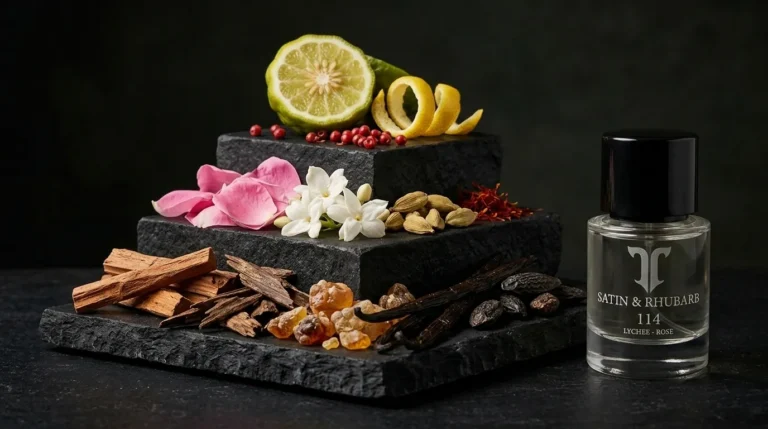 Perfume BasicsTop, Heart and Base Notes, ExplainedWhy does a perfume smell different after an hour? A simple guide to top, heart and base notes, the fragrance pyramid, and how to read a list of notes.