Wearing Perfume in a Shared City: Office, Gym, Restaurants and Places of Worship
Dubai is home to people from everywhere, and perfume habits differ. A friendly guide to wearing perfume considerately at work, at the gym, at dinner and beyond.

In the UAE, people from more than two hundred nationalities live and work side by side, and they bring their perfume habits with them. In some cultures, a generous, long-lasting scent is a sign of respect and hospitality. In others, the ideal is a perfume only noticed up close. Neither is wrong. In a shared city, the art is simply knowing your setting.
The one-arm rule
A useful guide wherever you are: your perfume should be noticeable within about an arm’s length, not across the room. If people can smell you before they see you, it’s probably too much for a shared space. In the evening or at a celebration, you can be more generous.
Remember that you stop noticing your own perfume after a while. It’s natural to keep adding sprays because you can’t smell it, when everyone around you still can.
At the office
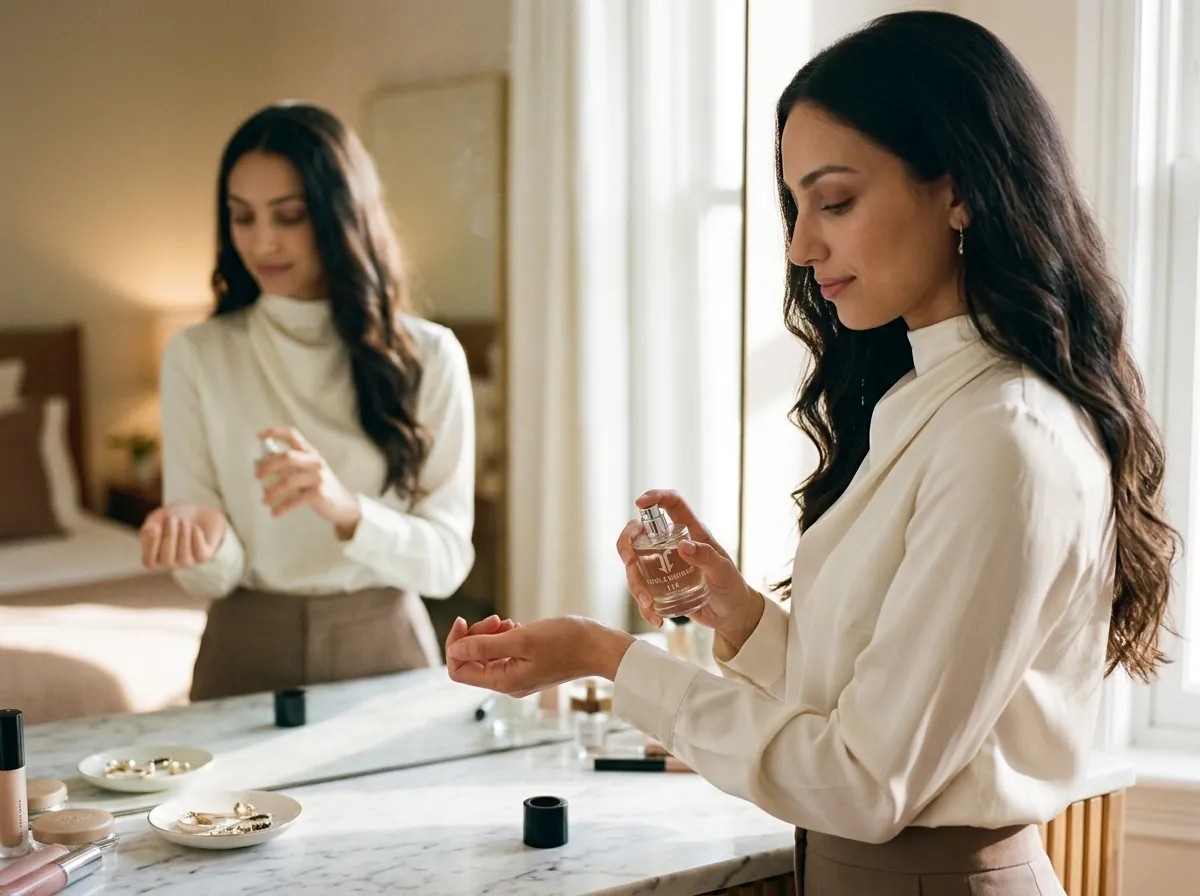
- Two or three sprays are plenty. Apply them at home, not at your desk.
- Choose something that doesn’t fill the room. Fresh, soft woody or musky scents tend to work well.
- Be mindful in meetings. Meeting rooms are small and air-conditioned, so a strong perfume travels.
- Some colleagues are sensitive. Fragrance can trigger headaches or allergies in some people. If a colleague mentions it, a lighter scent or applying to clothing rather than skin can help.
At the gym
Heat and exercise make perfume project much more strongly. Skip it before a workout, or keep to a light body mist, and save your perfume for after you’ve showered.
At restaurants

Fine dining is built around smell as much as taste. A heavy perfume can compete with the food, for you and for the next table. Apply a little less than usual, and keep it on your skin rather than on a scarf that will travel with every movement.
On flights, in taxis and on the metro
Enclosed spaces concentrate scent. Apply lightly before you travel, and avoid re-spraying in your seat. Many airlines and taxis are small, shared and air-conditioned; a little goes a long way.
In hospitals and clinics
Many patients are sensitive to smells. Keep perfume to a minimum or skip it when visiting someone who is unwell.
At places of worship
Scent has a place in many faiths, and customs vary:
- In many mosques, fragrance is part of the tradition. Oud and bukhoor are often burned, and many worshippers wear perfume oil, especially for Friday prayers.
- In churches and temples, incense may be burned during services.
- Wherever you go, follow the custom of the place and the community, and keep personal fragrance modest and close to the skin.
Whether and how to wear perfume during religious observances such as fasting is a matter for each person’s own faith and community.
During Ramadan

Ramadan is a month of reflection for many residents. Out of consideration for those who are fasting, many people keep perfume lighter during the day, especially in shared spaces. In the evenings, at iftar and family gatherings, fragrance becomes part of the hospitality, with oud, bukhoor and perfume welcoming guests.
At celebrations
Weddings, Eid, Diwali, Christmas parties and New Year’s Eve are the moments to wear your richest perfume. Even then, a few well-placed sprays will carry beautifully through an evening.
A quick guide
| Setting | How much | What to choose |
|---|---|---|
| Office | 2–3 sprays, applied at home | Fresh, soft woods, musk |
| Gym | None, or a light mist after | Something fresh |
| Restaurant | A little less than usual | Avoid very sweet or heavy scents |
| Flights and transport | Light, before you leave | Anything subtle |
| Hospitals | Minimal or none | — |
| Celebrations | Your richest perfume | Amber, oud, florals |
The takeaway
Perfume etiquette in a city like this one isn’t about rules. It’s about awareness: of the room, the occasion and the people around you. Wear your perfume with confidence, and let it be noticed by those close enough to enjoy it.
More from Atelier Notes
 Perfume BasicsHow to Find Your Signature ScentA signature scent should feel like you. A simple, step-by-step way to find yours: what to notice, how to test, and how to know when you've found it.
 Perfume CultureKannauj, India’s Perfume City, and the Art of AttarIn Kannauj, on the banks of the Ganges, perfumers still distil attars in copper pots, including one that smells of the first rain. The story of India's perfume city.
 Perfume BasicsHow to Read a Perfume Label: Ingredients, Allergens, Batch and ExpiryWhat do Alcohol Denat., Parfum (Fragrance), batch numbers and expiry symbols on a perfume box mean? A simple guide to reading a perfume label.