Perfume Glossary A–Z
From accord to vetiver: a plain-English A–Z of perfume terms, including notes, concentrations and Gulf traditions such as oud, bukhoor and attar.
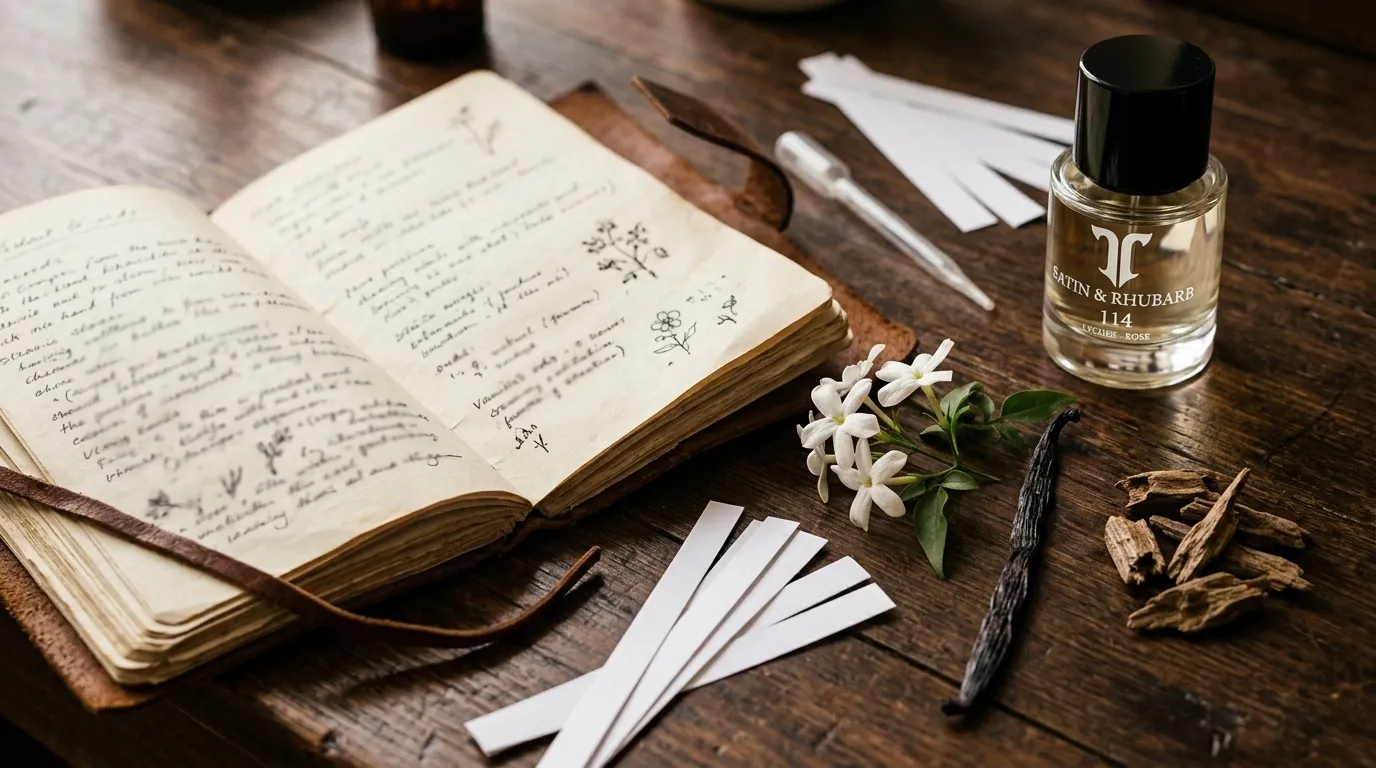
The language of perfume borrows from French, music and the Gulf’s own traditions. Here’s a plain-English guide to the words you’ll meet most often.
A
Absolute: A highly concentrated aromatic material extracted from delicate flowers such as jasmine or tuberose using solvents rather than heat.
Accord: Several materials blended to create a single new impression, much like a chord in music. An “amber accord” or “oud accord” is built, not found in nature.
Alcohol Denat.: Denatured alcohol, the standard base for spray perfumes. It carries the scent and then evaporates. Denatured means it has been made undrinkable.
Aldehydes: Synthetic materials that give a sparkling, soapy or “fizzy” brightness, famous in some classic floral perfumes.
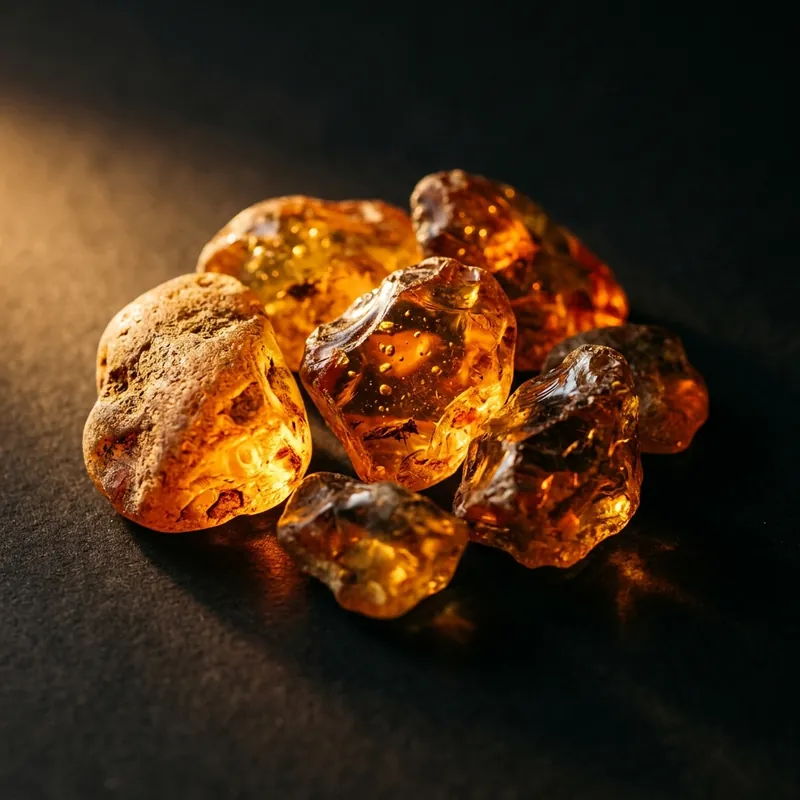
Amber: In perfumery, a warm, sweet, resinous accord, usually of vanilla, labdanum and benzoin. Not the same as fossilised amber or ambergris. Also the name of a fragrance family, formerly called “Oriental”. → The Fragrance Families
Ambergris: A rare natural material formed in sperm whales, prized for its salty, warm, skin-like scent. Most perfumes today use synthetic alternatives.
Animalic: Describes warm, musky, leathery or skin-like notes.
Aquatic: Fresh notes that evoke the sea, rain or water.
Aromatic: Herbal notes such as lavender, rosemary, sage and mint.
Atomiser: A spray bottle, often used for small travel sizes.
Attar (ittar): A concentrated, alcohol-free perfume oil, traditionally distilled into a sandalwood base. → Bukhoor, Attar and Perfume
B
Base notes: The deepest, longest-lasting layer of a perfume, such as woods, musks, resins and amber. → Top, Heart and Base Notes
Batch number: A code on the label that identifies when a perfume was made.
Benzoin: A sweet, vanilla-like balsamic resin.
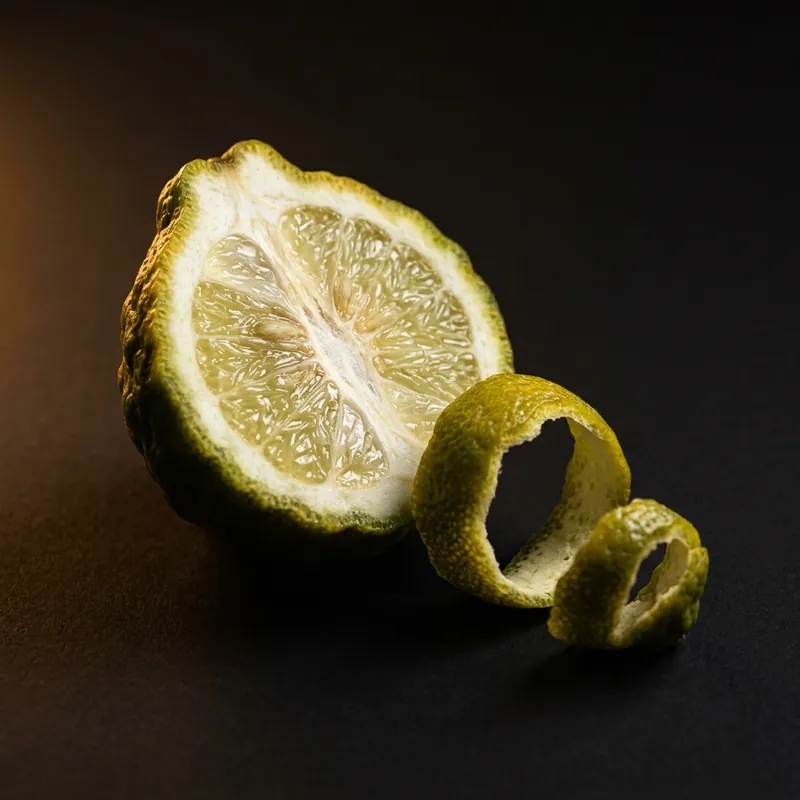
Bergamot: A citrus fruit whose peel oil is one of perfumery’s most-used top notes.
Blind buy: Buying a perfume without smelling it first.
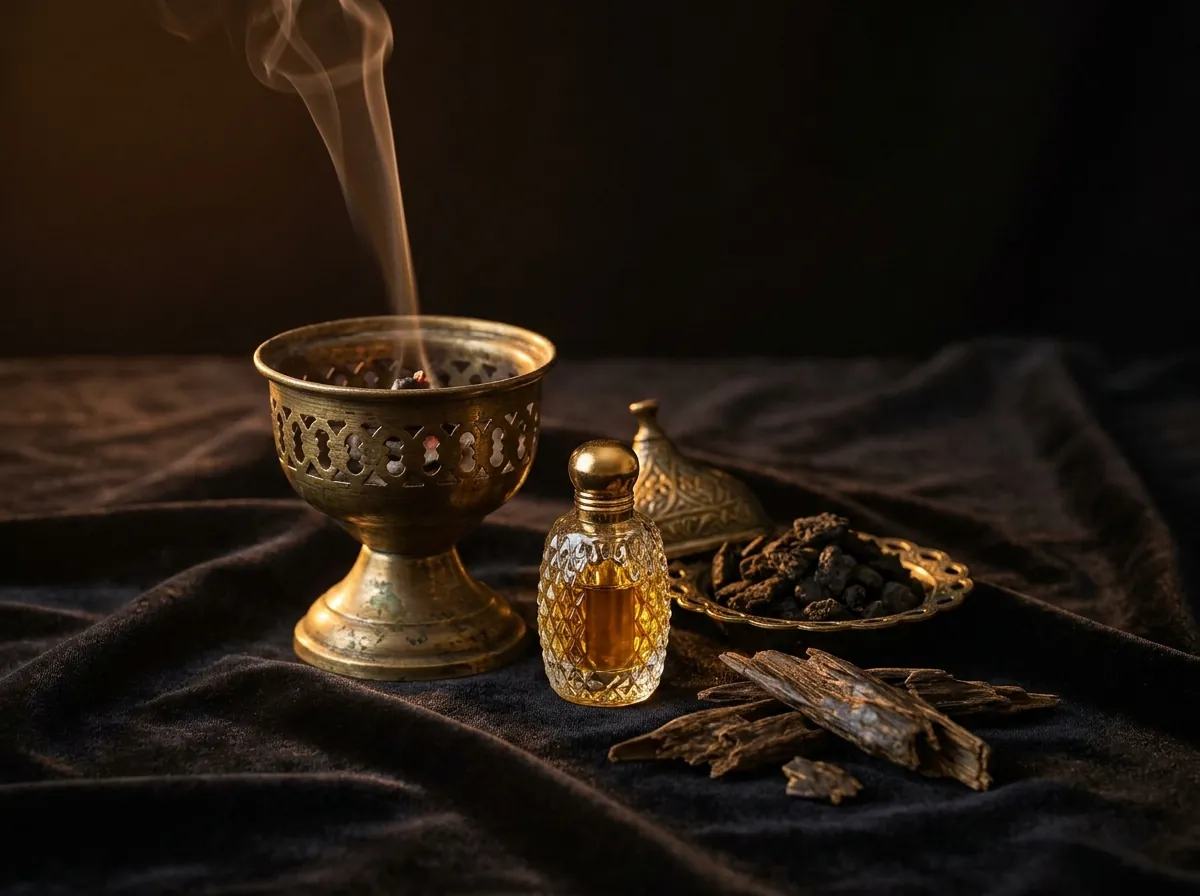
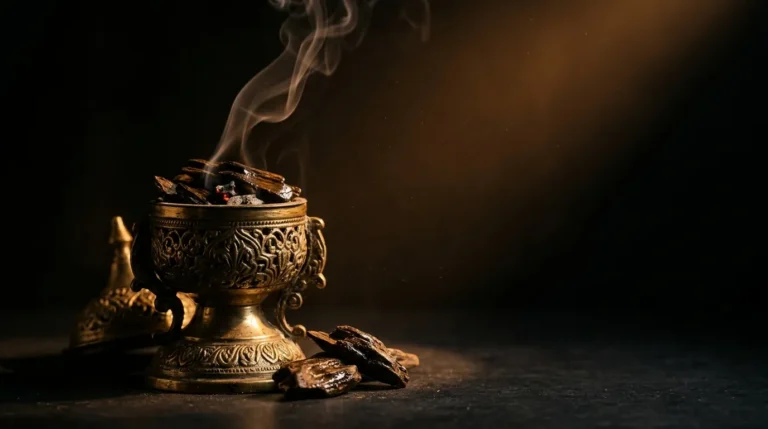
Bukhoor (bakhoor): Wood chips soaked in fragrant oils and resins, burned in a mabkhara to scent homes, clothes and hair. → Bukhoor, Attar and Perfume
C
Chypre: A classic structure of citrus top notes over a mossy, woody base of oakmoss and patchouli.
Citrus: The fresh fragrance family of lemon, orange, bergamot, grapefruit and mandarin.
Concentration: The share of perfume concentrate in a finished product. It’s what names like Eau de Parfum describe. → Eau de Parfum, Eau de Toilette, Cologne
Concentrate (perfume oil): The blend of aromatic materials that makes up the scent before it’s diluted in alcohol.
D
Decant: A small amount of perfume transferred from its original bottle into a smaller one.
Dehn al oud: Arabic for oud oil. → What Is Oud?
Dry down: The final phase of a perfume on the skin, when the base notes dominate.
E
Eau de Cologne: A light concentration, typically about 2–5%, traditionally citrus-led.
Eau de Parfum: A rich concentration, typically about 15–20%. Every Atelier T perfume is made as Eau de Parfum, blended at 25% perfume concentrate by weight.
Eau de Toilette: A lighter concentration, typically about 5–15%.
Eau Fraîche: A very light, refreshing concentration, around 1–3%.
Essential oil: A natural aromatic oil extracted from plants, usually by steam distillation or pressing.
Extrait de Parfum (Parfum): The most concentrated form of perfume, typically 20–30% or more.
F
Flanker: A new version of an existing perfume that shares its name, such as an “Intense” or “Night” edition.
Fougère: “Fern” in French. A fresh-aromatic structure of lavender, oakmoss and coumarin, the backbone of many classic men’s perfumes.
Fragrance family: A group of perfumes sharing a character: Fresh, Floral, Amber or Woody. → The Fragrance Families
G
Gourmand: Perfumes with edible notes such as vanilla, caramel, coffee or praline.
Green: Notes that smell of leaves, stems and cut grass.
H
Heart notes (middle notes): The core of a perfume, appearing after the top notes fade. → Top, Heart and Base Notes
Hand blended: At Atelier T, perfumes weighed, mixed, rested and bottled by hand in small batches. → What “Hand Blended” Means at Atelier T
I
IFRA: The International Fragrance Association, which sets safety standards for fragrance materials.
INCI: The international naming system for cosmetic ingredients. On an ingredient list, the perfume blend appears as Parfum (Fragrance).
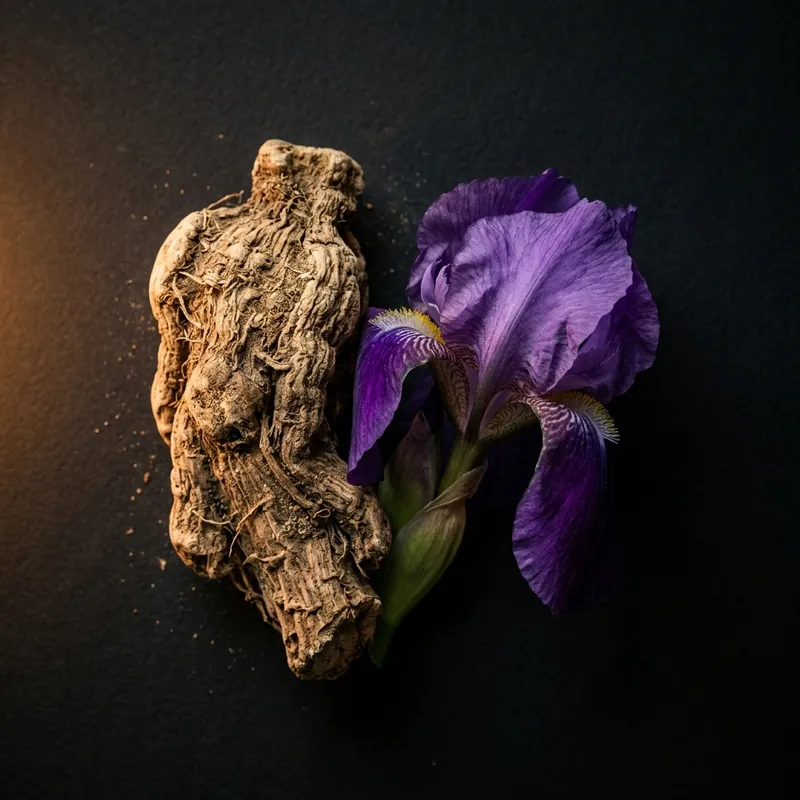
Iris (orris): A powdery, elegant note from the dried root of the iris plant, one of perfumery’s most expensive materials.
L
Labdanum: A sticky, warm resin from the rockrose shrub, a key part of amber accords.
Layering: Wearing several scented products together, such as oil, perfume and bukhoor. → Bukhoor, Attar and Perfume
Linear: A perfume that smells much the same from first spray to dry down.
Longevity: How long a perfume remains noticeable on skin or clothes.
M
Mabkhara (mabkhar): A traditional incense burner used for bukhoor and oud chips.
Maceration: The resting period after a perfume is blended, when its materials settle and come together.
Musk: A soft, clean, skin-like note. Today it’s made synthetically; natural animal musk is no longer used in mainstream perfumery.
N
Neroli: An oil distilled from bitter orange blossom: fresh, green and floral.
Niche perfume: Perfume from smaller, specialist houses, often more distinctive than mass-market fragrances.
Note: A single recognisable smell within a perfume, such as rose, sandalwood or vanilla.
O
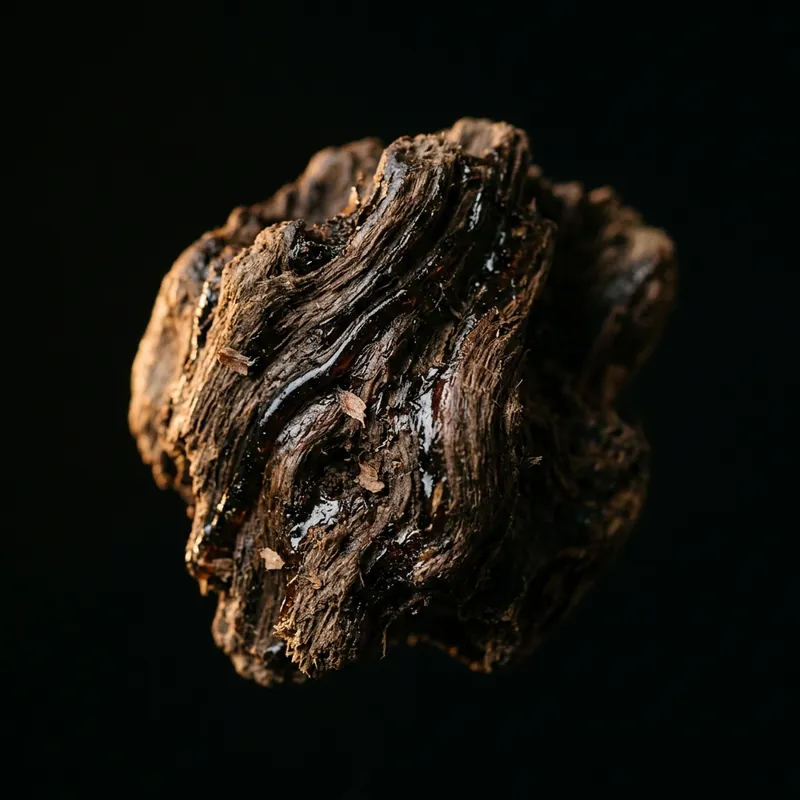
Oakmoss: A lichen with a damp, earthy, forest-floor scent, central to chypre perfumes.
Olfactory fatigue: When your nose gets used to a smell and stops noticing it. It’s why you can’t smell your own perfume after a while. → How to Make Perfume Last Longer in UAE Heat
Oud (agarwood): The dark, fragrant resin-filled wood of the Aquilaria tree, one of the most precious materials in perfumery. → What Is Oud?
P
Patchouli: An earthy, dark, slightly sweet leaf oil, a classic base note.
Projection: How far a perfume radiates from your skin into the space around you. Not the same as Sillage.
Pulse points: Warm areas where blood vessels are close to the skin, such as wrists, neck and inner elbows, traditionally used for applying perfume.
R
Resin: A thick, aromatic substance produced by trees, such as frankincense, myrrh or benzoin.
S
Saffron: A warm, leathery, slightly metallic spice note, much loved in Middle Eastern perfumery.
Sandalwood: A creamy, smooth, milky wood, one of the oldest perfume materials.
Sillage: French for “wake”. The trail of scent you leave behind as you move. Not the same as Projection.
Skin chemistry: The way an individual’s skin changes how a perfume smells and lasts.
Soli-flore: A perfume built around a single flower.
T
Tonka bean: A seed with a warm scent of vanilla, almond and hay.
Top notes: The first, brightest and most fleeting layer of a perfume. → Top, Heart and Base Notes
V
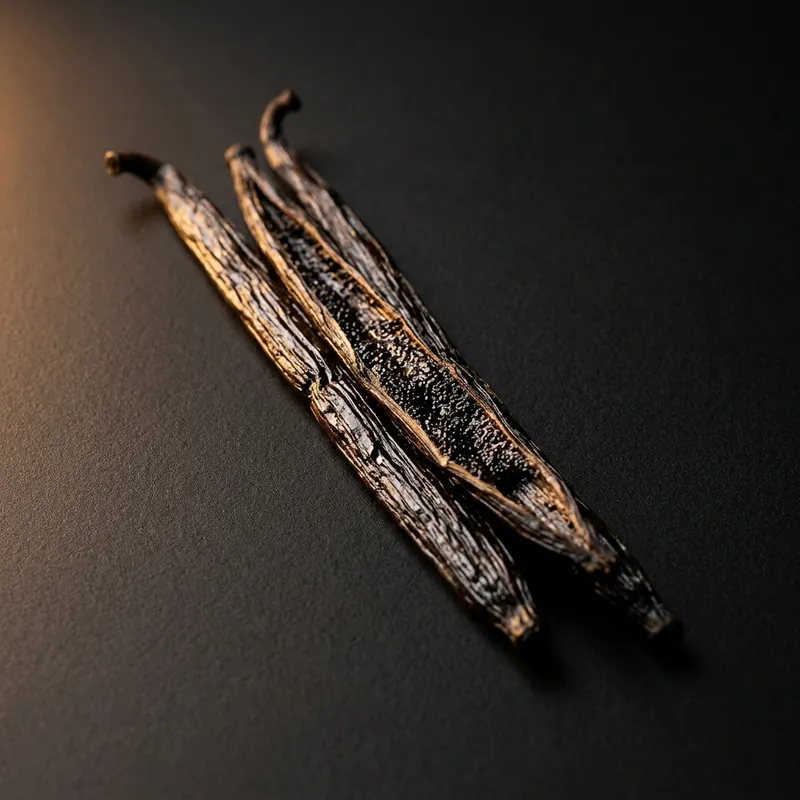
Vanilla: A warm, sweet, comforting note from the cured pods of the vanilla orchid, often supported by synthetic vanillin.
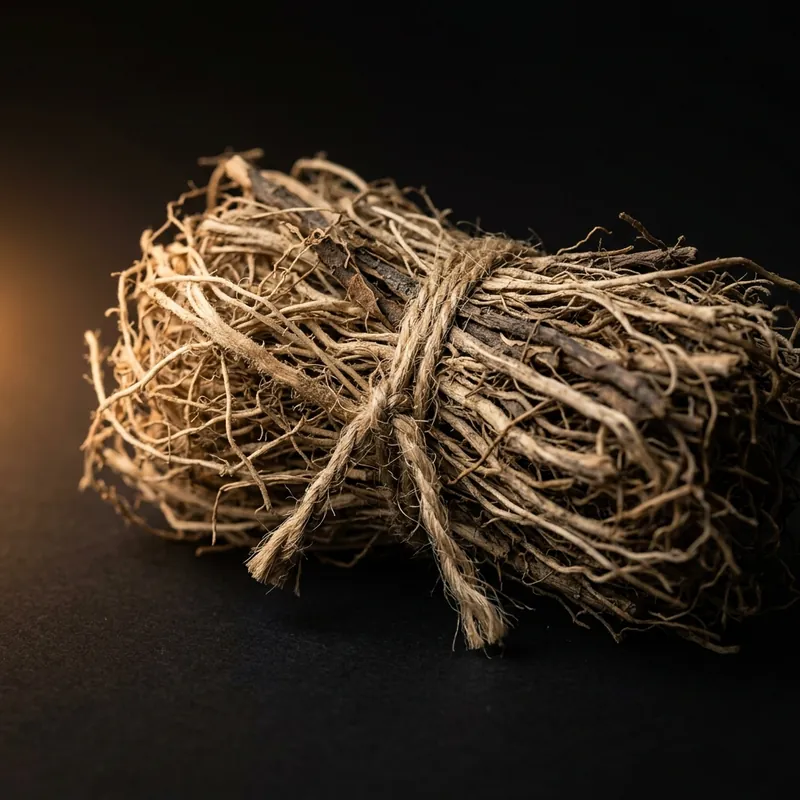
Vetiver: The smoky, earthy, woody root of a tropical grass.
W
Woody: The fragrance family of sandalwood, cedar, vetiver, oud and other woods. → The Fragrance Families
More from Atelier Notes
 Perfume CultureWhat Is Oud? The Story of the Gulf’s Most Precious ScentOud, or agarwood, is one of the world's rarest perfume materials. Where it comes from, why it's so valuable, and how it's used in the Gulf today.
 Perfume BasicsHow to Find Your Signature ScentA signature scent should feel like you. A simple, step-by-step way to find yours: what to notice, how to test, and how to know when you've found it.
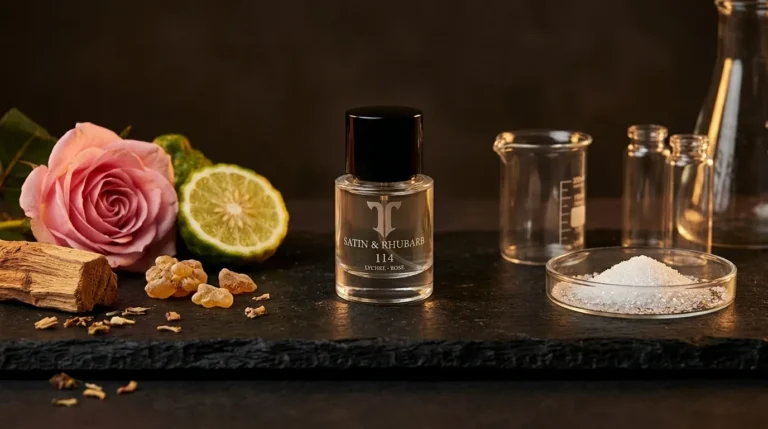 Perfume BasicsNatural vs Synthetic: What’s Really in Modern PerfumeAre synthetic perfume ingredients bad? Why almost every modern perfume blends natural and lab-made materials, and what each one brings to a scent.